Skip to Content Skip to Footer
LiveWell WIC logo
Livewell Wic
  • Home
  • Ellyn Satter
    • Ellyn Satter
      Prenatal / Postpartum
    • Ellyn Satter
      Newborn / Infant
    • Ellyn Satter
      Older Baby / Almost Toddler
    • Ellyn Satter
      Toddler / Preschooler
  • Breastfeeding
  • Eat·Grow·Live Healthy
    • Eat·Grow·Live Healthy
      Women
    • Eat·Grow·Live Healthy
      Infants
    • Eat·Grow·Live Healthy
      Children
    • Eat·Grow·Live Healthy
      Fathers
  • Live Well Blog
  • Español

About Us

  • Home
  • About Us

Welcome to Live Well, a website created to support families with easy-to-understand nutrition and wellness information.

We know parenting is a busy and sometimes overwhelming responsibility. Our goal is to share simple, helpful ideas that fit real life – without pressure or judgment.

Who We Are

Live Well is developed and maintained by Brush Art Corporation, a family-owned business with a passion for helping families live healthier lives. We partner with Women Infant and Children (WIC) and other government programs across the United States to provide content that connects with participants on a deeper level. Everything we create is designed to be clear, respectful, and supportive.

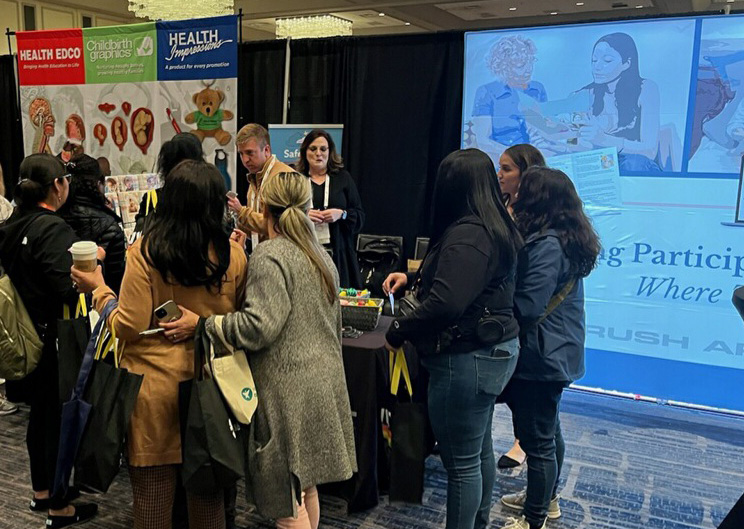
People engaging at health information booth, carrying bags.

For many years, we have helped programs create:

  • Nutrition education materials
  • Recipes and meal ideas
  • Breastfeeding and infant-feeding support
  • Wellness and self-care resources for parents and caregivers
  • Information that is kind, clear, and trustworthy
Pink flowers with green leaves, delicately illustrated.
Pink flowers and green leaves in a cluster.

Brush Art’s project team includes experienced professionals with deep expertise in public health communication and government programming.

Smiling person with arms crossed in black shirt.

ACCOUNT EXECUTIVE – Jake Brush

Jake manages WIC client accounts and guides projects from start to finish. He works closely with state agencies to ensure materials are delivered on time, on budget, and aligned with program goals. He holds degrees in Business Marketing and Business Management and has nearly a decade of experience at Brush Art.

ACCOUNT DIRECTOR – Stephani Weis

Stephani leads WIC projects and serves as the main point of contact for clients. She manages timelines, budgets, and cross-team coordination to keep projects running smoothly. She holds a degree in Business Administration and has strong experience in project management and quality control.

Smiling person with long hair, wearing a blouse.
Smiling woman with glasses, wearing a black sweater.

PROJECT & BRAND MANAGER – Cassidy Winsor

Cassidy leads the design and branding for WIC materials across print and digital platforms. She ensures all materials are clear, accessible, and visually consistent. She holds a Bachelor of Fine Arts in Graphic Design and has extensive experience in public health and education-focused design.

HEALTH EDUCATION CONTENT SPECIALIST – Amanda Hojnacki

Amanda writes and reviews health education content for WIC programs. She ensures materials are accurate, easy to understand, and aligned with public health guidance. She holds a degree in Community Health Education and Psychology and has nearly 20 years of experience in health education and medical training.

Smiling woman with short hair against plain background.

REGISTERED DIETICIAN

Woman smiling with earrings, wearing a patterned top.

Bridget Swinney, MS, RD, LD

BREASTFEEDING CONTENT EXPERTS

Smiling woman with short hair, wearing a necklace.

Dr. Maya Bunik, MD

Smiling woman with long hair against plain background.

Kaylee Rabaja RN, IBCLC

Our nutrition and breastfeeding experts help guide and review content related to food, infant feeding, and breastfeeding. They help ensure materials are evidence-based and family-friendly. Their combined backgrounds include registered dietetics, pediatrics, nursing, lactation consulting, and public health leadership.

Who We Work With

Brush Art Corporation has nearly two decades of direct experience supporting government programs. We have worked with over 30 different state and tribal WIC programs to help support outreach, enrollment, nutrition education, breastfeeding promotion, and benefit utilization campaigns. The map below highlights states we have previously or currently work with, and we are always looking to expand to new territories.

California○ Inactive
  • Alaska
  • Arkansas
  • Colorado
  • Connecticut
  • Delaware
  • District of Columbia
  • Indiana
  • Kansas
  • Louisiana
  • Maine
  • Maryland
  • Michigan
  • Minnesota
  • Montana
  • Nebraska
  • Nevada
  • New Hampshire
  • New Jersey
  • New Mexico & ITOs
  • New York
  • Oklahoma & ITOs
  • Oregon
  • Pennsylvania
  • South Carolina
  • Tennessee
  • Virginia
  • Washington
  • West Virginia
  • Wisconsin
  • Wyoming

What We Share

The information on Live Well is meant to help families:

  • Learn about healthy foods and drinks
  • Feed babies and young children with confidence
  • Make the most of WIC foods and benefits
  • Build healthy habits one small step at a time
  • Feel respected, supported, and empowered with feeding

Our content is:

  • Written in plain language
  • Reviewed for accuracy
  • Designed to be easy to read on phones and tablets
  • Created with real families in mind
Woman discussing brochure with seated man.

Who This Website Is For​

Live Well is for:

  • Parents and caregivers of babies and young children
  • Pregnant and postpartum individuals
  • WIC participants and families
  • Anyone looking for simple, trusted nutrition information; you do not need to be a WIC participant to explore the site.
Pregnant woman and child smiling, touching belly.
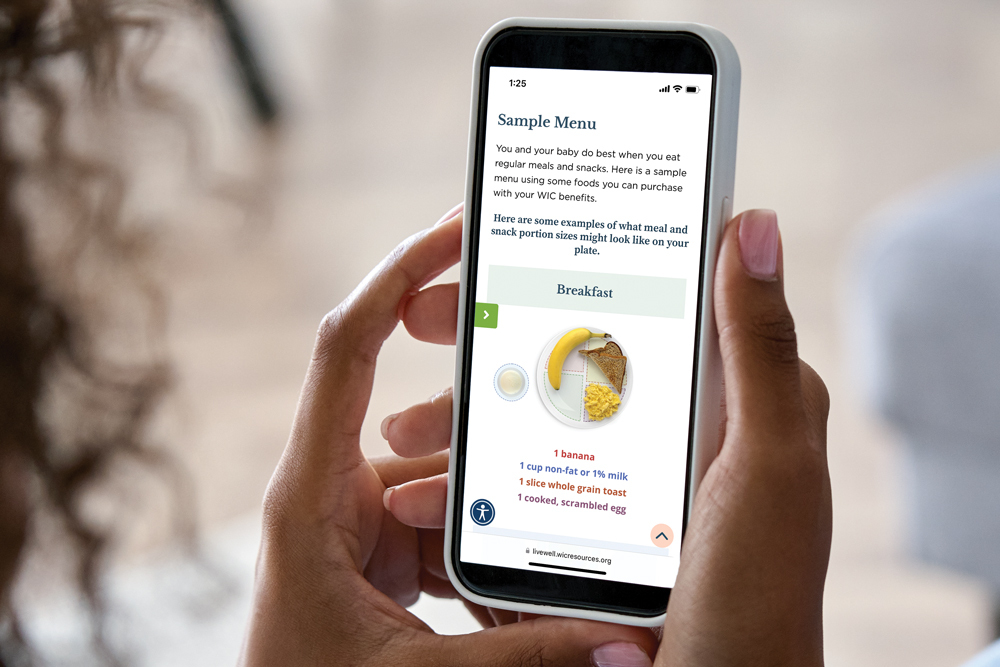
Person holding smartphone with WIC breakfast menu displayed.

How to Use This Website

Live Well is for learning and support.

  • The information shared here does not replace advice from your doctor, nurse, or WIC staff.
  • Everyone’s needs are different; use what feels helpful and skip what doesn’t.
  • If you have questions about your or your child’s health, we encourage you to talk with your WIC clinic or healthcare provider.

Need Help or Have Feedback?

If you have trouble using this website, need information in a different format, or want to share feedback, please let us know. Please contact us online or by phone at 785-454-3383.

Looking to create your own customized content?

We’d love to help! Please contact us and we’ll be in touch with more details.
LiveWell WIC program logo

Contact Us

USDA is an equal opportunity provider, employer, and lender.

Cookie PolicyAbout UsPrivacy PolicyTerms of Agreement

© Brush Art Corporation

  • Email
  • SMS
If you are using multiple emails, separate them with commas.

    SMS Communication Consent

    Share

    Share this link via:

    Cartoon vegetables with leafy tops gather playfully together.

    Side-Lying Hold

    1. For the right breast, lie on your right side with your baby facing you.
    2. Pull your baby close. Your baby’s mouth should be level with your nipple.
    3. In this position, you can cradle your baby’s back with your left arm and support yourself with your right arm and/or pillows.
    4. Keep loose clothing and bedding away from your baby.
    5. Reverse for the left breast.

    This hold is useful when:

    • You had a C-section
    • You want to rest while baby feeds
    • You are breastfeeding in the middle of the night
    • You and your baby are comfortable in this position
    Yellow circle with abstract, jagged shapes and patterns.

    Cross-Cradle Hold

    1. For the right breast, use your left arm to hold your baby’s head at your right breast and baby’s body toward your left side. A pillow across your lap can help support your left arm.
    2. Gently place your left hand behind your baby’s ears and neck, with your thumb and index finger behind each ear and your palm between baby’s shoulder blades. Turn your baby’s body toward yours so your tummies are touching.
    3. Hold your breast as if you are squeezing a sandwich. To protect your back, avoid leaning down to your baby. Instead, bring your baby to you.
    4. As your baby’s mouth opens, push gently with your left palm on baby’s head to help them latch on. Make sure you keep your fingers out of the way.
    5. Reverse for the left breast.

    This hold is useful when:

    • Your baby is premature
    • Your baby has a weak suck
    • Your baby needs help to stay latched
    • Your baby needs extra head support
    • You and your baby are comfortable in this position
    Cat playing with butterfly in a garden.

    Clutch or “Football” Hold

    1. For the right breast, hold your baby level, facing up, at your right side.
    2. Put your baby’s head near your right nipple and support their back and legs under your right arm.
    3. Hold the base of your baby’s head with your right palm. A pillow underneath your right arm can help support your baby’s weight.
    4. To protect your back, avoid leaning down to your baby. Bring baby to you instead.
    5. Reverse for the left breast.

    This hold is useful when:

    • You had a C-section
    • You have large breasts
    • You have flat or inverted nipples
    • You have a strong milk let-down
    • You are breastfeeding twins
    • Your baby likes to feed in an upright position
    • Your baby has reflux
    • You and your baby are comfortable in this position
    Peach circle with abstract shapes radiating outward.

    Cradle Hold

    1. For the right breast, cradle your baby with your right arm. Your baby will be on their left side across your lap, facing you at nipple level.
    2. Your baby’s head will rest on your right forearm with your baby’s back along your inner arm and palm.
    3. Turn your baby’s tummy toward your tummy. Your left hand is free to support your breast, if needed. Pillows can help support your arm and elbow.
    4. To protect your back, avoid leaning down to your baby. Instead, bring your baby to you.
    5. Reverse for the left breast.

    This hold is useful when:

    • Your baby needs help latching on
    • You and your baby are comfortable in this position
    Smiling peach character waving cheerful hello.

    Laid-Back Hold

    1. Lean back on a pillow with your baby’s tummy touching yours and their head at breast level. Some moms find that sitting up nearly straight works well. Others prefer to lean back and lie almost flat.
    2. You can place your baby’s cheek near your breast, or you may want to use one hand to hold your breast near your baby. It’s up to you and what you think feels best.
    3. Your baby will naturally find your nipple, latch, and begin to suckle.

    This hold is useful when:

    • Your baby is placed on your chest right after birth
    • You have a strong milk let-down
    • You have large breasts
    • You and your baby are comfortable in this position