Skip to Content Skip to Footer
LiveWell WIC logo
Livewell Wic
  • Home
  • Ellyn Satter
    • Ellyn Satter
      Prenatal / Postpartum
    • Ellyn Satter
      Newborn / Infant
    • Ellyn Satter
      Older Baby / Almost Toddler
    • Ellyn Satter
      Toddler / Preschooler
  • Breastfeeding
  • Eat·Grow·Live Healthy
    • Eat·Grow·Live Healthy
      Women
    • Eat·Grow·Live Healthy
      Infants
    • Eat·Grow·Live Healthy
      Children
    • Eat·Grow·Live Healthy
      Fathers
  • Live Well Blog
  • Español

4 TO 4½ YEARS

  • Home
  • Eat·Grow·Live Healthy
  • Children
  • 4 – 4.5 Years Old
  • Introduction
  • Breakfast
  • Lunch
  • Snacks
  • Dinner
  • Daily Suggested Food Group Amounts
  • Look what I can do!
  • Keep me safe and healthy.

I am 4 and want to do more!

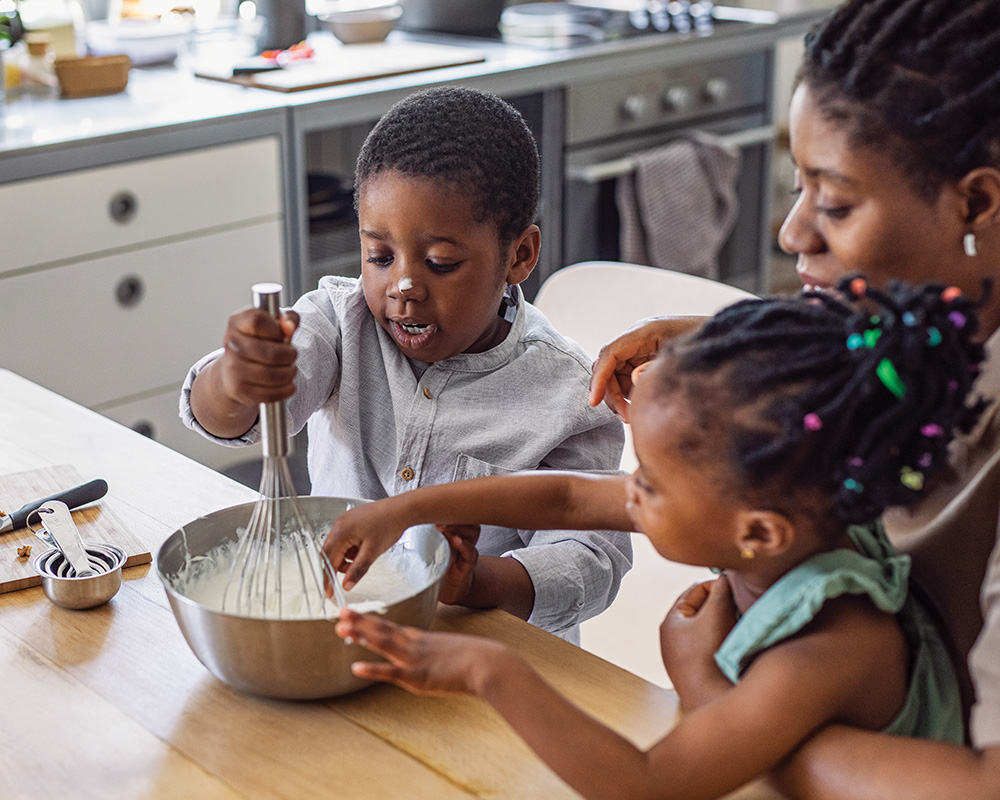
Child whisking ingredients with family in kitchen.

I am becoming MORE CONFIDENT.

I like to try new things. You are my teacher. I try to do what you do, so eat healthy foods and I will too.
I can help you in the kitchen. Helping you is fun!
  • I can peel foods using my fingers. Let me practice shucking corn or peeling a banana, an orange, or a hard-boiled egg.
  • I can roll food into a ball. I can roll dough into balls or make meatballs or cheeseballs.
  • I can use a hand juicer. Put a wet cloth under the juicer to stop it from slipping and show me how to juice halves of grapefruit, oranges, lemons, or limes.
  • I can crack the shell of raw eggs. After some practice, I can crack the eggs needed to make scrambled eggs, omelets, or for use in recipes.
  • I can mash foods. I can use a fork or potato masher to mash bananas, cooked potatoes, or cooked beans.
With your help, I will learn
more! Show me how to
measure ingredients.
This helps me learn math.

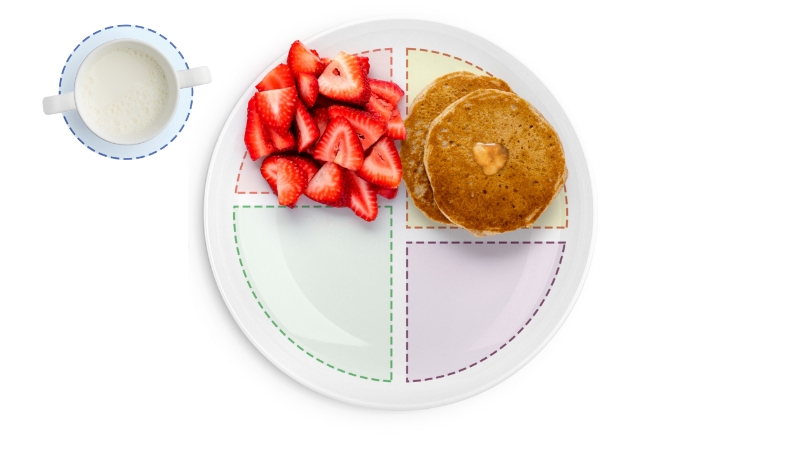
Here are some examples of what meal and snack portion sizes might look like on my plate.

Breakfast

½ cup large, sliced strawberries
1 cup low-fat milk
Pancakes with strawberries and milk on portioned plate.
2 small whole grain pancakes with 1 tablespoon syrup

Lunch

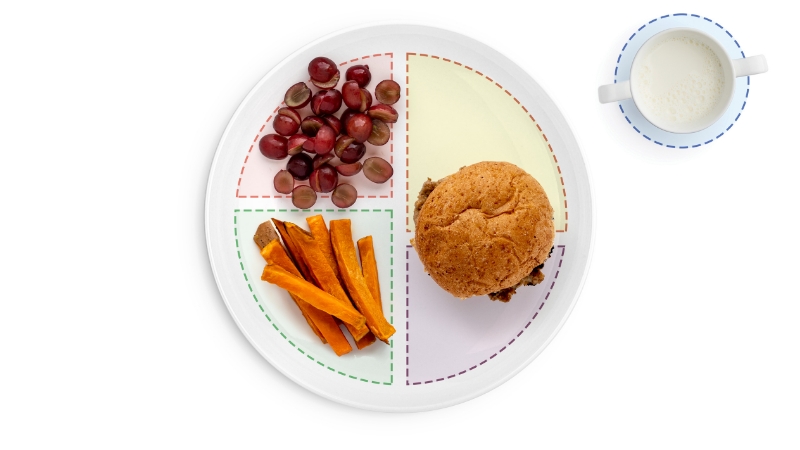
½ cup sliced in half grapes
½ cup sliced, baked sweet potato sticks
Divided plate with grapes, sweet potato, burger, milk cup.
1 small whole grain bun
with 1 ounce small turkey burger
1 cup low-fat milk

Snacks

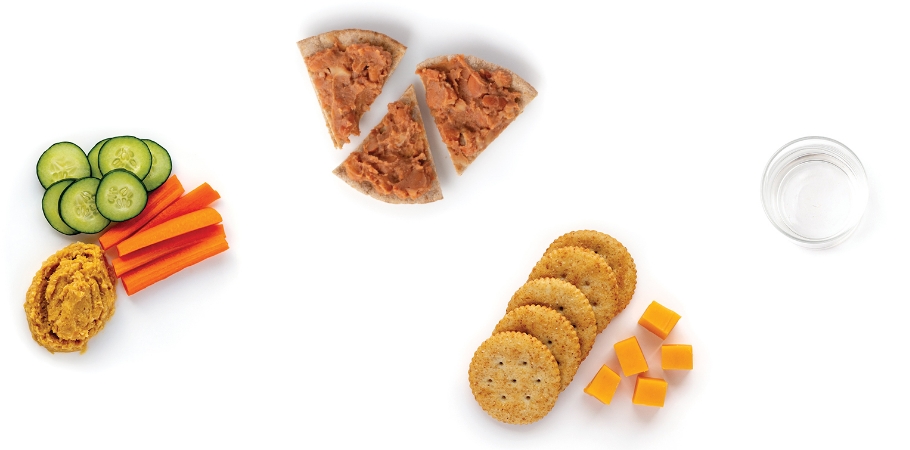
Healthy snacks arranged on a white background.
½ cup sliced cucumbers and carrots
with ¼ cup chickpea hummus
½ medium whole grain pita bread wedges, toasted
with ¼ cup mashed refried beans
4 or 6 whole grain crackers
with 4 or 5 cubes cheese
water between meals and snacks

Dinner

½ cup baked, sliced apple
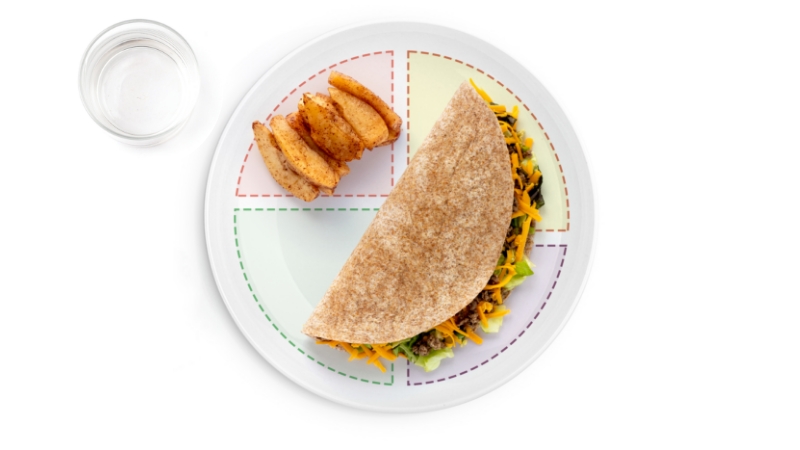
½ cup water
Whole wheat taco with potato wedges and water.
1 cup shredded lettuce
on 1 medium whole grain tortilla
with 1½ ounces cooked, lean ground beef
with ½ cup shredded cheese

Daily Suggested Food Group Amounts

FRUITS

3 servings a day
1 serving = ½ cup
(1½ cups total)

Cooked or soft, raw fruit.

Mashed, sliced, or chopped.

Offer a variety: red, yellow, orange, blue, and green.

VEGETABLES

3 servings a day
1 serving = ½ cup
(1½ cups total)

Mashed, sliced, or chopped veggies.

Offer a variety: dark green, orange, red, yellow, and purple.

GRAINS

8-10 servings a day
1 serving = ½ ounce
(4-5 ounces total)

Whole grain bread, tortillas, rice, or noodles.

Dry or cooked cereal.

PROTEINS

3-5 servings a day
1 serving = 1 ounce
(3-5 ounces total)

Cooked lean meat, poultry, or seafood.

Eggs.

Cooked beans, peas, or tofu.

Peanut butter.

DAIRY

5-6 servings a day
1 serving = ½ cup
(2½ cups total)

Low-fat milk.

Yogurt.

Cheese.

Look what I can do!

I learn a lot from being with you and being active. Let’s be active as a family! We can:

  • Play a game of tag
  • Cook meals together
  • Grow a garden at home or in the community
  • Run
  • Hop
  • Swing
  • Throw and kick balls
  • Go on a walk through the neighborhood

Keep me safe and healthy.

Take me to the doctor for my check-up.

I can brush my own teeth now, but watch me when I do so I don’t miss any teeth.

Remind me to wash my hands often. Washing my hands helps me stay healthy. I should wash them with warm water and soap for 20 seconds.

I need simple rules. Set limits on when, where, and how often we have screen time. Talk about what I’m learning as we watch together and keep me safe from what I shouldn’t see. Let’s focus on each other during meals and snacks, not a screen.

You May Also Like...

3.5 – 4 Years Old

3½ TO 4 YEARS Introduction Breakfast Lunch Snacks Dinner Daily Suggested Food Group Amounts Look what I can do! Keep Me Safe and Healthy Share to social Share I am…

Read More

4.5 – 5 Years Old

4½ TO 5 YEARS Introduction Breakfast Lunch Snacks Dinner Daily Suggested Food Group Amounts Look what I can do! Keep Me Safe and Healthy Share to social Share I’m growing…

Read More

Dad’s Guide to Newborn Care

Dad's guide to Newborn Care Dear Dad Breastfeeding Support Spit Up, Burping, Dirty Diapers Baby’s Time with Dad Keeping Your Baby Safe Fatherhood Resources Share to social Share Dear Dad,…

Read More
LiveWell WIC program logo

Contact Us

USDA is an equal opportunity provider, employer, and lender.

Cookie PolicyAbout UsPrivacy PolicyTerms of Agreement

© Brush Art Corporation

  • Email
  • SMS
If you are using multiple emails, separate them with commas.

    SMS Communication Consent

    Share

    Share this link via:

    Cartoon vegetables with leafy tops gather playfully together.

    Side-Lying Hold

    1. For the right breast, lie on your right side with your baby facing you.
    2. Pull your baby close. Your baby’s mouth should be level with your nipple.
    3. In this position, you can cradle your baby’s back with your left arm and support yourself with your right arm and/or pillows.
    4. Keep loose clothing and bedding away from your baby.
    5. Reverse for the left breast.

    This hold is useful when:

    • You had a C-section
    • You want to rest while baby feeds
    • You are breastfeeding in the middle of the night
    • You and your baby are comfortable in this position
    Yellow circle with abstract, jagged shapes and patterns.

    Cross-Cradle Hold

    1. For the right breast, use your left arm to hold your baby’s head at your right breast and baby’s body toward your left side. A pillow across your lap can help support your left arm.
    2. Gently place your left hand behind your baby’s ears and neck, with your thumb and index finger behind each ear and your palm between baby’s shoulder blades. Turn your baby’s body toward yours so your tummies are touching.
    3. Hold your breast as if you are squeezing a sandwich. To protect your back, avoid leaning down to your baby. Instead, bring your baby to you.
    4. As your baby’s mouth opens, push gently with your left palm on baby’s head to help them latch on. Make sure you keep your fingers out of the way.
    5. Reverse for the left breast.

    This hold is useful when:

    • Your baby is premature
    • Your baby has a weak suck
    • Your baby needs help to stay latched
    • Your baby needs extra head support
    • You and your baby are comfortable in this position
    Cat playing with butterfly in a garden.

    Clutch or “Football” Hold

    1. For the right breast, hold your baby level, facing up, at your right side.
    2. Put your baby’s head near your right nipple and support their back and legs under your right arm.
    3. Hold the base of your baby’s head with your right palm. A pillow underneath your right arm can help support your baby’s weight.
    4. To protect your back, avoid leaning down to your baby. Bring baby to you instead.
    5. Reverse for the left breast.

    This hold is useful when:

    • You had a C-section
    • You have large breasts
    • You have flat or inverted nipples
    • You have a strong milk let-down
    • You are breastfeeding twins
    • Your baby likes to feed in an upright position
    • Your baby has reflux
    • You and your baby are comfortable in this position
    Peach circle with abstract shapes radiating outward.

    Cradle Hold

    1. For the right breast, cradle your baby with your right arm. Your baby will be on their left side across your lap, facing you at nipple level.
    2. Your baby’s head will rest on your right forearm with your baby’s back along your inner arm and palm.
    3. Turn your baby’s tummy toward your tummy. Your left hand is free to support your breast, if needed. Pillows can help support your arm and elbow.
    4. To protect your back, avoid leaning down to your baby. Instead, bring your baby to you.
    5. Reverse for the left breast.

    This hold is useful when:

    • Your baby needs help latching on
    • You and your baby are comfortable in this position
    Smiling peach character waving cheerful hello.

    Laid-Back Hold

    1. Lean back on a pillow with your baby’s tummy touching yours and their head at breast level. Some moms find that sitting up nearly straight works well. Others prefer to lean back and lie almost flat.
    2. You can place your baby’s cheek near your breast, or you may want to use one hand to hold your breast near your baby. It’s up to you and what you think feels best.
    3. Your baby will naturally find your nipple, latch, and begin to suckle.

    This hold is useful when:

    • Your baby is placed on your chest right after birth
    • You have a strong milk let-down
    • You have large breasts
    • You and your baby are comfortable in this position