
Skip to Content Skip to Footer
LiveWell WIC logo
Livewell Wic
  • Home
  • Ellyn Satter
    • Ellyn Satter
      Prenatal / Postpartum
    • Ellyn Satter
      Newborn / Infant
    • Ellyn Satter
      Older Baby / Almost Toddler
    • Ellyn Satter
      Toddler / Preschooler
  • Breastfeeding
  • Eat·Grow·Live Healthy
    • Eat·Grow·Live Healthy
      Women
    • Eat·Grow·Live Healthy
      Infants
    • Eat·Grow·Live Healthy
      Children
    • Eat·Grow·Live Healthy
      Fathers
  • Live Well Blog
  • Español

The Benefits of Breastfeeding

  • Home
  • Breastfeeding
  • The Many Benefits of Breastfeeding
  • Benefits for Babies
  • Benefits for Moms

Breastfeeding gives babies a healthy start in life and it benefits moms too!

Benefits for Babies

Mother breastfeeding her baby on a cozy couch.

Your milk changes as your baby grows

The first milk you make during pregnancy and just after birth is called colostrum. It is thick and golden yellow in color. This milk is very nutritious and has antibodies to protect your baby from getting sick. It also helps your newborn’s digestive system to grow and function well.

About 3 to 5 days after birth, colostrum changes into mature milk. Mature milk is white and looks thinner than colostrum. It has just the right amount of fat, sugar, water, and protein to help your baby grow.

Human milk helps protect your baby from illness
Shield with a medical cross symbol.
This protection is unique and changes to meet your baby’s needs.
Breastfed babies have lower risks of:
  • Asthma
  • Obesity
  • Type 1 diabetes
  • Ear and lung infections
  • Diarrhea and vomiting
  • Problems with their digestive system
“I decided to breastfeed for the health benefits — not just for me, but for my baby, too. Breastfeeding gives my baby all the nutrients he needs.”
– Danielle, new mom
Breastfeeding reduces the risk of SIDS
Babies who are breastfed or fed expressed human milk are at lower risk for sudden infant death syndrome (SIDS) compared with babies who were never fed breastmilk. The longer you exclusively breastfeed your baby, the lower your baby’s risk of SIDS.
Formula is harder to digest
For many babies, human milk is much easier to digest than formula. Unless your baby’s healthcare provider tells you to supplement with formula for medical reasons, it’s best to feed baby human milk.

Benefits for Moms

Breastfeeding makes life easier

Breastfeeding may seem like it takes more effort than formula feeding, but it can make life easier once you and your baby settle into a good routine.
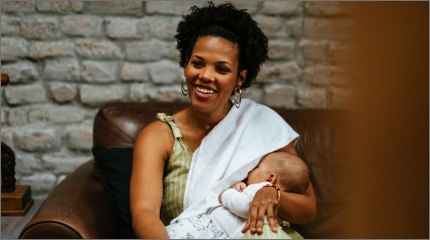
Smiling woman breastfeeding baby on couch.

When you breastfeed:

  • You can satisfy your baby’s hunger right away
  • You don’t have to buy, measure, and mix formula
  • You don’t need to warm bottles in the middle of the night
  • You don’t have to make extra trips to the store for formula
Baby smiling while being gently patted on head.

Also, breastfed babies may be sick less often than formula fed babies. This means less:
  • Time off work to care for a sick child
  • Trips to the doctor
  • Money spent on co-pays and medicine
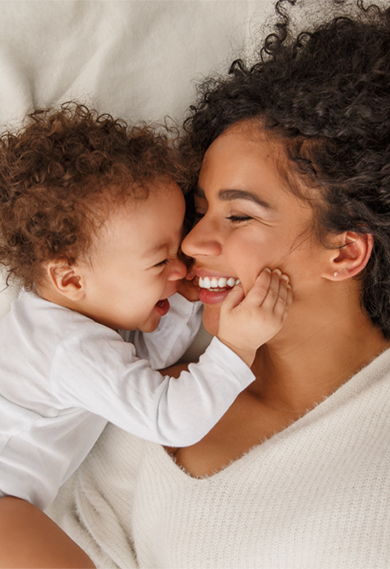
Mother and child smiling face-to-face on bed.
BREASTFEEDING HELPS MOM & BABY BOND
Human touch is important to newborns. It helps them feel secure, comfort, and love. Breastfeeding mothers also benefit from this closeness. The skin-to-skin contact helps your milk flow and can calm you as you breastfeed.

“Breastfeeding is beautiful. The bond it creates is stronger than I dreamed it could be.” – Anna, breastfeeding mom

“Building trust with my newborn is the best feeling in the world.” – Rosa, breastfeeding mom

“Breastfeeding is something that only I can provide for my growing baby. It’s such a special bond.” – Marianna, breastfeeding mom

  • Did you know?
    Your baby can smell you and knows the unique scent of your milk.

Did you know?
Your baby can smell you and knows the unique scent of your milk.

Breastfeeding is good for mom’s health

Mothers who breastfeed recover from childbirth more quickly and easily. They also have a lower risk of:

  • Type 2 diabetes
  • High blood pressure
  • Ovarian cancer
  • Certain types of breast cancer
  • Breastfeeding may also help you lose weight. Many women who breastfed have said it helped them get back to their pre-pregnancy weight more quickly. Exclusively breastfeeding can burn up to 600 calories per day.

Breastfeeding may also help you lose weight. Many women who breastfed have said it helped them get back to their pre-pregnancy weight more quickly. Exclusively breastfeeding can burn up to 600 calories per day.

You May Also Like...

Breastfeeding in Public

Breastfeeding In Public Share to social Share Some moms may feel uncomfortable breastfeeding in public. If this sounds like you, remember you are feeding your baby and not doing anything…

Read More

Handling Stress

Handling Stress Share to social Share Having a new baby and learning to breastfeed can be stressful. Listen to your body when you are feeling stressed. Take care of yourself…

Read More

Pumping and Storing Your Milk

Pumping and Storing Your Milk Ways To Express Your Milk by Hand or Pump Storing Your Milk Before and After Expressing or Handling Human Milk Tips For Freezing Milk Tips…

Read More
LiveWell WIC program logo

Contact Us

USDA is an equal opportunity provider, employer, and lender.

Cookie PolicyAbout UsPrivacy PolicyTerms of Agreement

© Brush Art Corporation

  • Email
  • SMS
If you are using multiple emails, separate them with commas.

    SMS Communication Consent

    Share

    Share this link via:

    Cartoon vegetables with leafy tops gather playfully together.

    Side-Lying Hold

    1. For the right breast, lie on your right side with your baby facing you.
    2. Pull your baby close. Your baby’s mouth should be level with your nipple.
    3. In this position, you can cradle your baby’s back with your left arm and support yourself with your right arm and/or pillows.
    4. Keep loose clothing and bedding away from your baby.
    5. Reverse for the left breast.

    This hold is useful when:

    • You had a C-section
    • You want to rest while baby feeds
    • You are breastfeeding in the middle of the night
    • You and your baby are comfortable in this position
    Yellow circle with abstract, jagged shapes and patterns.

    Cross-Cradle Hold

    1. For the right breast, use your left arm to hold your baby’s head at your right breast and baby’s body toward your left side. A pillow across your lap can help support your left arm.
    2. Gently place your left hand behind your baby’s ears and neck, with your thumb and index finger behind each ear and your palm between baby’s shoulder blades. Turn your baby’s body toward yours so your tummies are touching.
    3. Hold your breast as if you are squeezing a sandwich. To protect your back, avoid leaning down to your baby. Instead, bring your baby to you.
    4. As your baby’s mouth opens, push gently with your left palm on baby’s head to help them latch on. Make sure you keep your fingers out of the way.
    5. Reverse for the left breast.

    This hold is useful when:

    • Your baby is premature
    • Your baby has a weak suck
    • Your baby needs help to stay latched
    • Your baby needs extra head support
    • You and your baby are comfortable in this position
    Cat playing with butterfly in a garden.

    Clutch or “Football” Hold

    1. For the right breast, hold your baby level, facing up, at your right side.
    2. Put your baby’s head near your right nipple and support their back and legs under your right arm.
    3. Hold the base of your baby’s head with your right palm. A pillow underneath your right arm can help support your baby’s weight.
    4. To protect your back, avoid leaning down to your baby. Bring baby to you instead.
    5. Reverse for the left breast.

    This hold is useful when:

    • You had a C-section
    • You have large breasts
    • You have flat or inverted nipples
    • You have a strong milk let-down
    • You are breastfeeding twins
    • Your baby likes to feed in an upright position
    • Your baby has reflux
    • You and your baby are comfortable in this position
    Peach circle with abstract shapes radiating outward.

    Cradle Hold

    1. For the right breast, cradle your baby with your right arm. Your baby will be on their left side across your lap, facing you at nipple level.
    2. Your baby’s head will rest on your right forearm with your baby’s back along your inner arm and palm.
    3. Turn your baby’s tummy toward your tummy. Your left hand is free to support your breast, if needed. Pillows can help support your arm and elbow.
    4. To protect your back, avoid leaning down to your baby. Instead, bring your baby to you.
    5. Reverse for the left breast.

    This hold is useful when:

    • Your baby needs help latching on
    • You and your baby are comfortable in this position
    Smiling peach character waving cheerful hello.

    Laid-Back Hold

    1. Lean back on a pillow with your baby’s tummy touching yours and their head at breast level. Some moms find that sitting up nearly straight works well. Others prefer to lean back and lie almost flat.
    2. You can place your baby’s cheek near your breast, or you may want to use one hand to hold your breast near your baby. It’s up to you and what you think feels best.
    3. Your baby will naturally find your nipple, latch, and begin to suckle.

    This hold is useful when:

    • Your baby is placed on your chest right after birth
    • You have a strong milk let-down
    • You have large breasts
    • You and your baby are comfortable in this position