
Skip to Content Skip to Footer
LiveWell WIC logo
Livewell Wic
  • Home
  • Ellyn Satter
    • Ellyn Satter
      Prenatal / Postpartum
    • Ellyn Satter
      Newborn / Infant
    • Ellyn Satter
      Older Baby / Almost Toddler
    • Ellyn Satter
      Toddler / Preschooler
  • Breastfeeding
  • Eat·Grow·Live Healthy
    • Eat·Grow·Live Healthy
      Women
    • Eat·Grow·Live Healthy
      Infants
    • Eat·Grow·Live Healthy
      Children
    • Eat·Grow·Live Healthy
      Fathers
  • Live Well Blog
  • Español
  • Creole

Feeding your prematurely born older baby

  • Home
  • Ellyn Satter
  • Older Baby / Almost Toddler
  • Frequently Asked Questions
  • Feeding your prematurely born older baby
baby-bottle

How do you feel your baby is coming along?

How is he like or not like babies who weren’t born early?

How is feeding going?

How and what are you feeding?

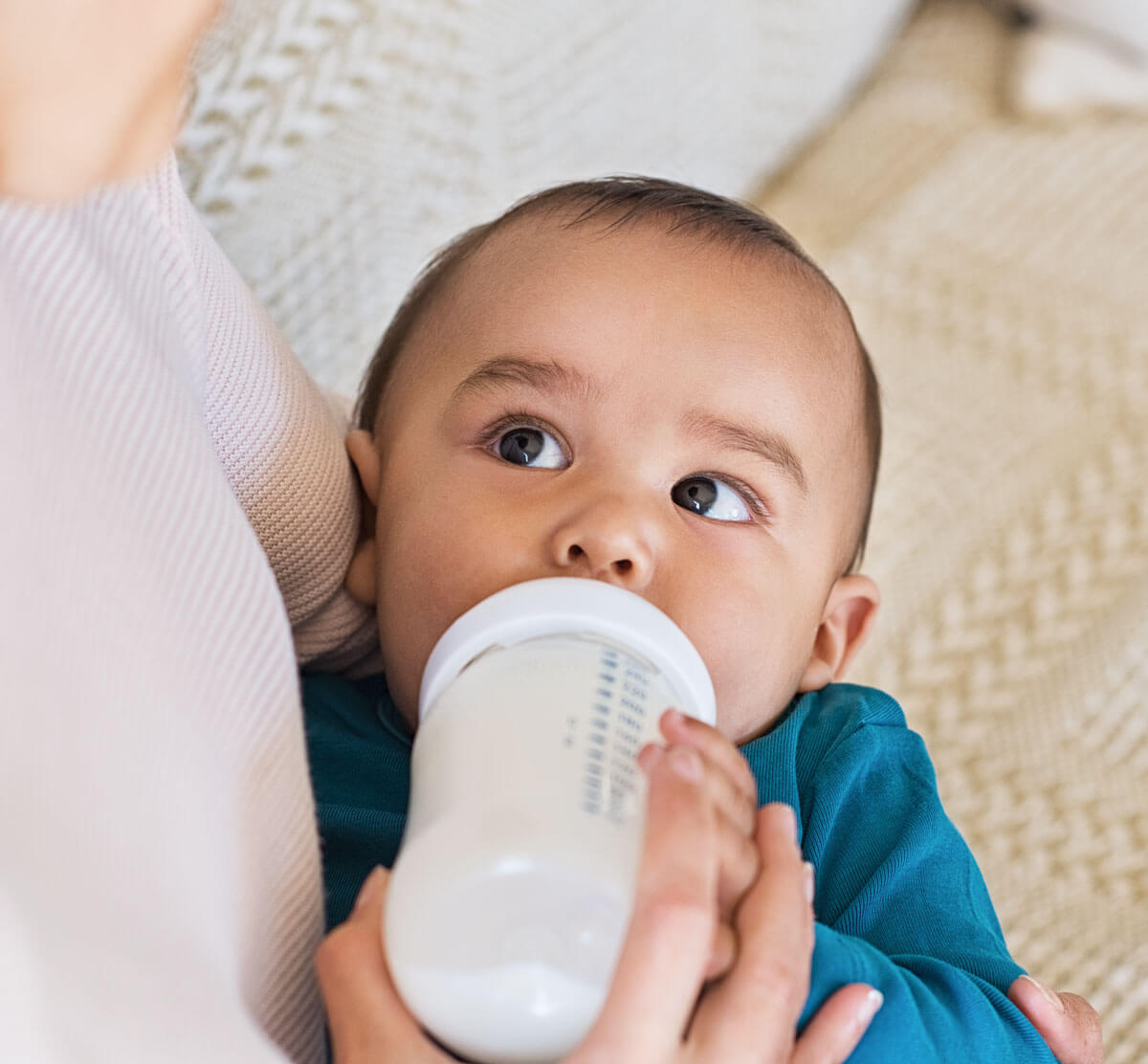
Many babies start learning to eat solid foods when they are 4 or 5 months old. Don’t even think about starting solids that early for your prematurely born baby. He isn’t ready and he gets the nutrition he needs from breastmilk or formula.

Instead of starting solids, relax and have fun with your baby. Nipple-feeding will go better now. Take time to enjoy it! Both you and your baby deserve it! What he needs most—and so do you—is a nice, cozy time with feeding.

baby-feeding
baby-feeding-mom

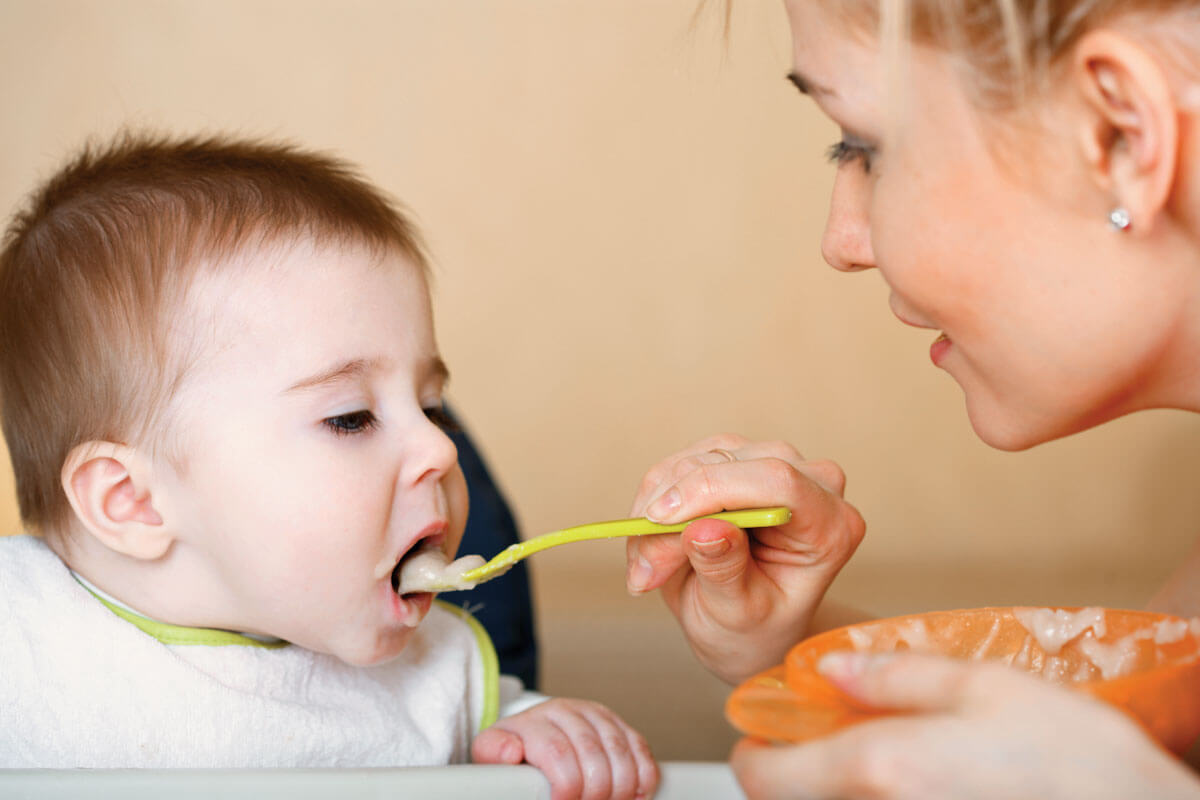
Once you start solids, your baby may be slow to learn. But he will learn—if you take your time.

He needs to find out that the spoon won’t hurt him. Be slow about adding new pureed foods as well.

In the hospital, what happened to his mouth hurt him—tubes, suctioning, respirators. Now, each new taste and texture may frighten him because it is new.

Introduce new food by putting a taste on his lip. Wait for him to open his mouth for more before you try to feed him. If he doesn’t open his mouth, stop. Offer it another time. Before long, he will be ready for more.

left-side

Here’s how to help your prematurely born older baby to do a good job with eating:

  • Wait to start cereal until he can sit up, follow the spoon with his eyes, and open his mouth when the spoon gets close.
  • Once you start solids, take it slow and easy.
  • Use one spoon and one kind of cereal.
  • Give him lots of chances to learn to enjoy it. Take time to enjoy feeding him.
  • Then introduce pureed or purchased vegetables or fruits, one at a time.
  • Gradually introduce foods with lumps: Finely fork-mashed soft fruits or cooked vegetables. Purchased toddler foods.
  • Put finger foods on his high chair tray so he can see them and touch them. He will pick them up and eat them when he is ready.

You May Also Like...

Making your own baby food

Making your own baby food Share to social Share If you cook meals for yourself, it’s simple to make the food right for your baby. If you don’t cook meals…

Read More

Is your child too small? Does he not eat enough?

Is your child too small? Does he not eat enough? Share to social Share Why do you think your child doesn’t eat enough? Why do you think he is too…

Read More

Is your child too big? Does she eat too much?

Is your child too big? Does she eat too much? Share to social Share Why do you think your child eats too much? Why do you think she is too…

Read More

© Ellyn Satter

LiveWell WIC program logo

Contact Us

USDA is an equal opportunity provider, employer, and lender.

Cookie PolicyAbout UsPrivacy PolicyTerms of Agreement

© Brush Art Corporation

  • Email
  • SMS
If you are using multiple emails, separate them with commas.

    SMS Communication Consent

    Share

    Share this link via:

    Side Lying Hold

    Side-Lying Hold

    1. For the right breast, lie on your right side with your baby facing you.
    2. Pull your baby close. Your baby’s mouth should be level with your nipple.
    3. In this position, you can cradle your baby’s back with your left arm and support yourself with your right arm and/or pillows.
    4. Keep loose clothing and bedding away from your baby.
    5. Reverse for the left breast.

    This hold is useful when:

    • You had a C-section
    • You want to rest while baby feeds
    • You are breastfeeding in the middle of the night
    • You and your baby are comfortable in this position
    Wooden carved fork resting on the edge

    Cross-Cradle Hold

    1. For the right breast, use your left arm to hold your baby’s head at your right breast and baby’s body toward your left side. A pillow across your lap can help support your left arm.
    2. Gently place your left hand behind your baby’s ears and neck, with your thumb and index finger behind each ear and your palm between baby’s shoulder blades. Turn your baby’s body toward yours so your tummies are touching.
    3. Hold your breast as if you are squeezing a sandwich. To protect your back, avoid leaning down to your baby. Instead, bring your baby to you.
    4. As your baby’s mouth opens, push gently with your left palm on baby’s head to help them latch on. Make sure you keep your fingers out of the way.
    5. Reverse for the left breast.

    This hold is useful when:

    • Your baby is premature
    • Your baby has a weak suck
    • Your baby needs help to stay latched
    • Your baby needs extra head support
    • You and your baby are comfortable in this position
    Woman with shopping bag

    Clutch or “Football” Hold

    1. For the right breast, hold your baby level, facing up, at your right side.
    2. Put your baby’s head near your right nipple and support their back and legs under your right arm.
    3. Hold the base of your baby’s head with your right palm. A pillow underneath your right arm can help support your baby’s weight.
    4. To protect your back, avoid leaning down to your baby. Bring baby to you instead.
    5. Reverse for the left breast.

    This hold is useful when:

    • You had a C-section
    • You have large breasts
    • You have flat or inverted nipples
    • You have a strong milk let-down
    • You are breastfeeding twins
    • Your baby likes to feed in an upright position
    • Your baby has reflux
    • You and your baby are comfortable in this position
    Cartoon-style abstract bird silhouette

    Cradle Hold

    1. For the right breast, cradle your baby with your right arm. Your baby will be on their left side across your lap, facing you at nipple level.
    2. Your baby’s head will rest on your right forearm with your baby’s back along your inner arm and palm.
    3. Turn your baby’s tummy toward your tummy. Your left hand is free to support your breast, if needed. Pillows can help support your arm and elbow.
    4. To protect your back, avoid leaning down to your baby. Instead, bring your baby to you.
    5. Reverse for the left breast.

    This hold is useful when:

    • Your baby needs help latching on
    • You and your baby are comfortable in this position
    Abstract geometric shapes in pastel

    Laid-Back Hold

    1. Lean back on a pillow with your baby’s tummy touching yours and their head at breast level. Some moms find that sitting up nearly straight works well. Others prefer to lean back and lie almost flat.
    2. You can place your baby’s cheek near your breast, or you may want to use one hand to hold your breast near your baby. It’s up to you and what you think feels best.
    3. Your baby will naturally find your nipple, latch, and begin to suckle.

    This hold is useful when:

    • Your baby is placed on your chest right after birth
    • You have a strong milk let-down
    • You have large breasts
    • You and your baby are comfortable in this position