Skip to Content Skip to Footer
LiveWell WIC logo
Livewell Wic
  • Home
  • Ellyn Satter
    • Ellyn Satter
      Prenatal / Postpartum
    • Ellyn Satter
      Newborn / Infant
    • Ellyn Satter
      Older Baby / Almost Toddler
    • Ellyn Satter
      Toddler / Preschooler
  • Breastfeeding
  • Eat·Grow·Live Healthy
    • Eat·Grow·Live Healthy
      Women
    • Eat·Grow·Live Healthy
      Infants
    • Eat·Grow·Live Healthy
      Children
    • Eat·Grow·Live Healthy
      Fathers
  • Live Well Blog
  • Español
When to Start Peanut and Egg to Help Prevent Allergies

When to Start Peanut and Egg to Help Prevent Allergies

  • Home
  • Live Well Blog
  • When to Start Peanut and Egg to Help Prevent Allergies
April 1, 2026 Infant

baby How Starting Solid Foods at the Right Time May Help Prevent Food Allergies

Years ago, parents were told to wait before giving babies foods that might cause allergies. Some pregnant women were even told to avoid eating certain foods.

Now we know more.

A large research study showed that babies at high risk for peanut allergy were less likely to develop a peanut allergy when they were given small amounts of peanut foods starting in infancy. The benefit lasted into the teen years.

Because of this research, expert groups updated their advice.

expert recommded

women icon What Do Experts Recommend?

Medical groups now say:

  • Pregnant and breastfeeding parents do not need to avoid allergy foods to prevent allergies.
  • Offering your baby a variety of foods may help lower allergy risk.
  • Introduce peanut and egg around 6 months of age, but not before 4 months.

    Note: If your baby has severe eczema or a known food allergy, talk with your health care provider before giving peanut foods.
  • Other common allergy foods can also be introduced around 
this time.

Since these changes have been made, peanut allergy rates have gone down in young children, even with those who already had a food allergy or atopic dermatitis (such as eczema, asthma, or hay fever).

dinner plate Common Foods That Can Cause Allergies

These are the most common allergy foods:

PEANUTS
TREE NUTS

(like almonds, cashews, walnuts)

EGGS
MILK AND DAIRY
WHEAT
SOY
SESAME
FISH
SHELLFISH
explaimation icon

Peanuts and tree nuts are more likely to cause serious reactions.
That is why early introduction is important.

notebook icon How to Introduce Allergy Foods Safely

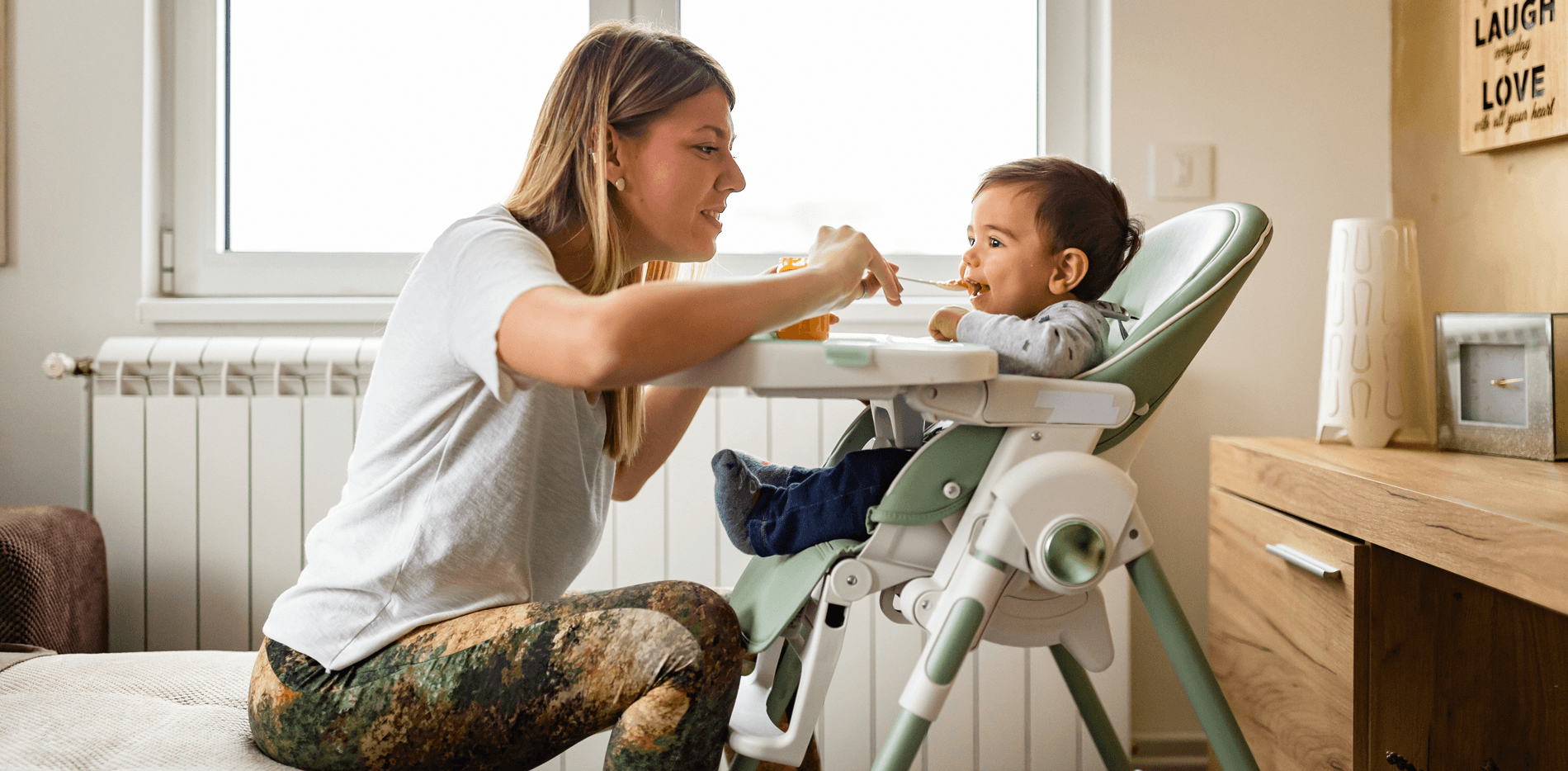
Your baby should show signs they are ready for solids before starting.

These signs include:

  • Sitting up with support
  • Good head control
  • Interest in food
  • Opening their mouth when food is offered

Start introducing potential allergy foods after your baby has tried a few simple foods, such as infant cereal, pureed fruits, or vegetables.

  • After giving a new food, watch your baby for about 2 hours for any signs of a reaction.
  • Wait 3 to 5 days before introducing another new potential allergy food.
peanut tips
PEANUT TIPS
  • ✓ Introduce peanut foods between 4–6 months, once baby is ready for solids.
  • ✓ Start with a small amount (about 1–2 teaspoons of thinned peanut butter).
  • ✓ Mix peanut butter with warm cereal, breastmilk, formula, or pureed fruit.
  • Never give whole nuts or thick spoonfuls of peanut butter. These are choking hazards.
  • Whole nuts should not be given until about age 4.
children eating
EGG TIPS
  • ✓ Offer well-cooked egg (such as scrambled egg).
  • ✓ Start with small bites.
dairy tips
DAIRY TIPS
  • Do not replace breastmilk or formula with cow’s milk until 1 year of age.
  • ✓ You may offer small amounts of whole milk yogurt around 6 months.

Baby Blues Signs of a Food Allergy

Call your health care provider right away if your baby has:

  • Hives (pink raised bumps)
  • Swelling of the lips, face, or eyes
  • Vomiting
  • Coughing
  • Trouble breathing
  • Severe sleepiness
Call 911 if your baby has trouble breathing, repeated vomiting, or becomes very weak or pale.

tips search Tips for Success

1

Start solids around 6 months, when your baby shows signs they are ready.

2

Do not delay offering peanut or egg without a medical reason.

3

Offer a wide variety of foods.

4

Keep foods safe and in the right texture for your baby.

If you have questions, your WIC staff or health care provider can help guide you.

REFERENCES:

American Academy of Pediatrics. healthychildren.org. (2025, June 12). When to Introduce Egg, Peanut Butter & Other Common Food Allergens to a Baby.
https://www.healthychildren.org/English/healthy-living/nutrition/Pages/when-to-introduce-egg-peanut-butter-and-other-common-food-allergens-to-your-baby-food-allergy-prevention-tips.aspx

American Academy of Pediatrics. healthychildren.org. (2025). Symptom Checker: Food Allergies.
https://www.healthychildren.org/English/tips-tools/Symptom-Checker/IFrame/Pages/symptomviewer.aspx?symptom=Food+Allergy

Fleischer, David M. et al. A Consensus Approach to the Primary Prevention of Food Allergy Through Nutrition:
Guidance from the American Academy of Allergy, Asthma, and Immunology; American College of Allergy, Asthma, and Immunology; and the Canadian Society for Allergy and Clinical Immunology. The Journal of Allergy and Clinical Immunology: In Practice, Volume 9, Issue 1, 22 – 43.e4
https://www.jaci-inpractice.org/article/S2213-2198(20)31211-3/abstract

MedlinePlus. (2025, January 1). Allergen.
https://medlineplus.gov/ency/article/002229.htm

Author: Bridget Swinney, MS, RDN, LD

You May Also Like...

December 17, 2025

The Basics of Paced Bottle-Feeding

The Basics of Paced Bottle-Feeding Paced bottle-feeding helps your baby eat slowly and take breaks – just like they would if they were breastfeeding. It can also help prevent overfeeding…

Read More
4
December 3, 2025

How Do I Know If My Baby Could Be Tongue-Tied?

How Do I Know If My Baby Could Be Tongue-Tied?A tongue-tie happens when the little string under your baby’s tongue is too tight or short. This can make it hard…

Read More
0
October 23, 2024

Protect Your Baby from Cronobacter

A germ you’ve probably never heard of could be very dangerous to your baby. Cronobacter is a common germ found in many places—the yard, kitchen, and living room, just to…

Read More
0
  • Infant
    • The Basics of Paced Bottle-Feeding
    • How Do I Know If My Baby Could Be Tongue-Tied?
    • Protect Your Baby from Cronobacter
    • Exploring the World with Baby – Sensory Play
    • Get Your Baby “Back” to Sleep in a Safe Environment
  • Children
    • Shopping With Kids: A Simple Way to Help Them Like More Foods
    • Pumpkin Fun: Free and Healthy Activities for Kids Under 5
    • Letting Your Child Play with Food Can Be a Good Thing
    • Is Snack Time Treat Time?
    • Fun Ways to Learn About Healthy Food and Get Moving!
  • General /Family
    • The 2025-2030 Dietary Guidelines for Americans – What Families Need to Know
    • Finding Calm When Life Gets Busy: Stress-Management for Parents
    • February Is National Heart Month: Simple Ways to Show Your Heart Some Love
    • 10 Ways to Enjoy Avocados – And Helpful Tips to Feed with Confidence
    • Food, Feelings, and Finding Balance: Understanding Disordered Eating
  • Women
    • Newborn Hunger Cues: How to Know When Your Baby Is Hungry or Full
    • How to Know Your Baby Is Getting Enough Breastmilk
    • Breastfeeding Through Growth Spurts and Sleep Changes
    • Baby Blues… or Is It Something More?
    • Gut Health and Gestational Diabetes
  • Recipes
    • Heart-Healthy Recipe: Banana Berry Oatmeal Cups
    • Is the Chia Seed Challenge Worth It?
    • Extra Vegetables Quiche
    • Easy Pumpkin Muffins
    • Confetti Bean Salad
LiveWell WIC program logo

    Contact Us

USDA is an equal opportunity provider, employer, and lender.

Cookie PolicyAbout UsPrivacy PolicyTerms of Agreement

© Brush Art Corporation

  • Email
  • SMS
If you are using multiple emails, separate them with commas.

    SMS Communication Consent

    Share

    Share this link via:

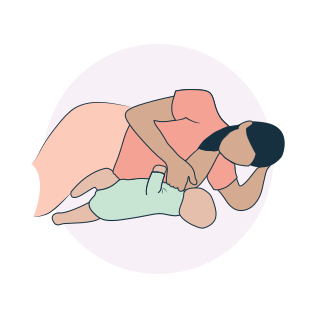
    Side Lying Hold

    Side-Lying Hold

    1. For the right breast, lie on your right side with your baby facing you.
    2. Pull your baby close. Your baby’s mouth should be level with your nipple.
    3. In this position, you can cradle your baby’s back with your left arm and support yourself with your right arm and/or pillows.
    4. Keep loose clothing and bedding away from your baby.
    5. Reverse for the left breast.

    This hold is useful when:

    • You had a C-section
    • You want to rest while baby feeds
    • You are breastfeeding in the middle of the night
    • You and your baby are comfortable in this position
    Wooden carved fork resting on the edge

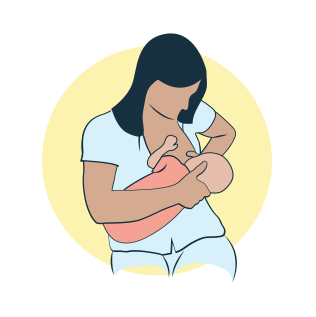
    Cross-Cradle Hold

    1. For the right breast, use your left arm to hold your baby’s head at your right breast and baby’s body toward your left side. A pillow across your lap can help support your left arm.
    2. Gently place your left hand behind your baby’s ears and neck, with your thumb and index finger behind each ear and your palm between baby’s shoulder blades. Turn your baby’s body toward yours so your tummies are touching.
    3. Hold your breast as if you are squeezing a sandwich. To protect your back, avoid leaning down to your baby. Instead, bring your baby to you.
    4. As your baby’s mouth opens, push gently with your left palm on baby’s head to help them latch on. Make sure you keep your fingers out of the way.
    5. Reverse for the left breast.

    This hold is useful when:

    • Your baby is premature
    • Your baby has a weak suck
    • Your baby needs help to stay latched
    • Your baby needs extra head support
    • You and your baby are comfortable in this position
    Woman with shopping bag

    Clutch or “Football” Hold

    1. For the right breast, hold your baby level, facing up, at your right side.
    2. Put your baby’s head near your right nipple and support their back and legs under your right arm.
    3. Hold the base of your baby’s head with your right palm. A pillow underneath your right arm can help support your baby’s weight.
    4. To protect your back, avoid leaning down to your baby. Bring baby to you instead.
    5. Reverse for the left breast.

    This hold is useful when:

    • You had a C-section
    • You have large breasts
    • You have flat or inverted nipples
    • You have a strong milk let-down
    • You are breastfeeding twins
    • Your baby likes to feed in an upright position
    • Your baby has reflux
    • You and your baby are comfortable in this position
    Cartoon-style abstract bird silhouette

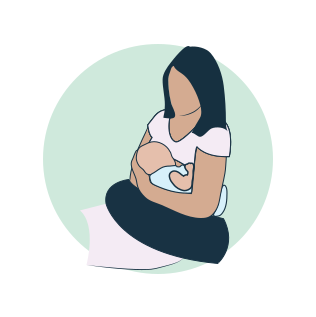
    Cradle Hold

    1. For the right breast, cradle your baby with your right arm. Your baby will be on their left side across your lap, facing you at nipple level.
    2. Your baby’s head will rest on your right forearm with your baby’s back along your inner arm and palm.
    3. Turn your baby’s tummy toward your tummy. Your left hand is free to support your breast, if needed. Pillows can help support your arm and elbow.
    4. To protect your back, avoid leaning down to your baby. Instead, bring your baby to you.
    5. Reverse for the left breast.

    This hold is useful when:

    • Your baby needs help latching on
    • You and your baby are comfortable in this position
    Abstract geometric shapes in pastel

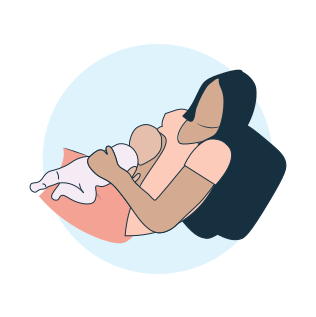
    Laid-Back Hold

    1. Lean back on a pillow with your baby’s tummy touching yours and their head at breast level. Some moms find that sitting up nearly straight works well. Others prefer to lean back and lie almost flat.
    2. You can place your baby’s cheek near your breast, or you may want to use one hand to hold your breast near your baby. It’s up to you and what you think feels best.
    3. Your baby will naturally find your nipple, latch, and begin to suckle.

    This hold is useful when:

    • Your baby is placed on your chest right after birth
    • You have a strong milk let-down
    • You have large breasts
    • You and your baby are comfortable in this position