Skip to Content Skip to Footer
LiveWell WIC logo
Livewell Wic
  • Home
  • Ellyn Satter
    • Ellyn Satter
      Prenatal / Postpartum
    • Ellyn Satter
      Newborn / Infant
    • Ellyn Satter
      Older Baby / Almost Toddler
    • Ellyn Satter
      Toddler / Preschooler
  • Breastfeeding
  • Eat·Grow·Live Healthy
    • Eat·Grow·Live Healthy
      Women
    • Eat·Grow·Live Healthy
      Infants
    • Eat·Grow·Live Healthy
      Children
    • Eat·Grow·Live Healthy
      Fathers
  • Live Well Blog
  • Español
kids-kitchen-with-parents

Good-for-Your-Gut Foods, according to a Dietitian

  • Home
  • Live Well Blog
  • Good-for-Your-Gut Foods, according to a Dietitian
June 11, 2025 General /Family

Your Gut, Your Health

Your gut health affects more than just digestion—it can impact your mood, immune system, and even lower your risk for diseases like diabetes.

The key to a healthy gut is having more “good” bacteria than “bad” bacteria.

Good bacteria help break down food, fight off illness, and support mental well-being.

Gut-Brain Communication

Did you know your gut and brain “talk”?

In fact, researchers even call the gut your “second brain” because it sends signals to your real brain!

Stress, mood, and depression can have a negative impact on gut bacteria. Other things like lack of sleep, pollution, and antibiotics can also harm your gut health.

And gut bacteria can influence your appetite and food choices, too.
That means what you eat can affect how you feel—and how you feel can affect what you eat!

mom_son_Kitchen

Helpful Terms to Know:

Gut-microbiome-svg
Gut microbiome

Also known as “gut microbiota” or “gut flora”, are the bacteria, fungi, and viruses in your gut. Some are good, some are bad.

Probiotics-svg-icon
Probiotics

Live, good bacteria found in some foods and supplements. The more variety of probiotics in your diet, the better!

prebiotics-svg-icon
Prebiotics

Certain types of fiber-rich foods that feed good bacteria. If you’re new to eating these foods, start slow, as they can cause gas!

Tip!
Eating a variety of probiotic and prebiotic foods can help keep your gut healthy and support overall well-being.

Probiotics introduce good bacteria, while prebiotics feed those bacteria so they can thrive.

To give your gut the best care,
choose a variety of probiotic and prebiotic foods like these:

Examples of Probiotic Foods
  • Yogurt: Choose plain and add your own fruit or sweetener.
  • Acidophilus milk & buttermilk: These contain natural probiotics.
  • Kefir: A drinkable yogurt-like product, sometimes thick like sour cream.
  • Miso: A salty paste made from fermented soybeans, barley, or rice. Great for soups and sauces.
  • Tempeh: A fermented soybean cake, often used as a meat substitute.
  • Kimchi: A spicy, fermented Korean cabbage dish.
  • Sauerkraut: Look for refrigerated, unpasteurized versions for probiotics.
  • Kombucha: A fermented tea that contains probiotics and sometimes a small amount of alcohol.
✓
Your Baby’s First Probiotic Food: Breastmilk

Breastfeeding helps babies build a strong gut microbiome. The probiotics in breastmilk may protect against diarrhea, infections, and inflammation.

Examples of Prebiotic Foods
  • Beans & legumes: Especially black-eyed peas (also called cowpeas) and soybeans.
  • Whole grains: Barley, oats, wheat bran, corn, whole grain breads and cereals.
  • Onions, leeks, garlic & chives: These help feed good gut bacteria.
  • Fruits: Apples, bananas (especially green ones), raspberries, apricots.
  • Vegetables: Jicama, asparagus, carrots, green beans, tomatoes.
  • Chicory root: Added to some foods as inulin and found in chicory coffee.
  • Potatoes: Especially when cooked and then cooled, like in potato salad.
✓
What about Prebiotic Sodas?

Drinks like Olipop and Poppi have less sugar than regular sodas and contain added prebiotic fiber (about 9 grams per can). They’re low in calories and could be a fun occasional treat that also supports gut health!

Foods to Eat Less of for Better Gut Health
  • Artificial sweeteners: Can harm gut bacteria. Avoid foods with aspartame, sucralose, and saccharin for better gut health.
  • High-sugar foods: Cakes, cookies, candy, sweet tea, and soda.
  • Ultra-processed foods: Often contain artificial ingredients that hurt gut bacteria like emulsifiers, flavor enhancers and additives.
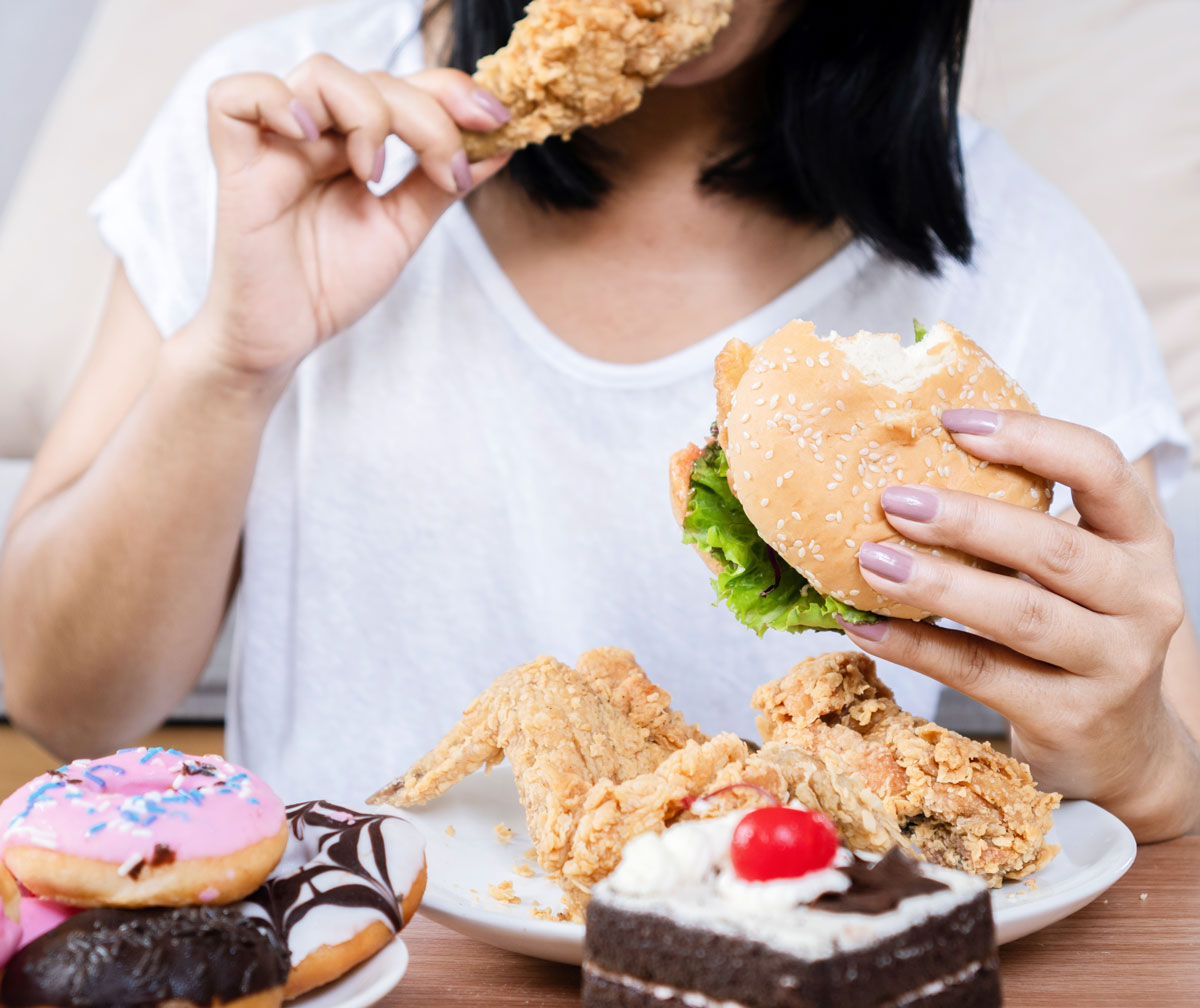
  • Fried foods: High in saturated and trans fats, which are unhealthy fats.
  • Too much alcohol: Can disrupt gut balance.
bac_foods-to-avoid
family-in-kitchen

A Healthy Gut, A Healthier You

Taking care of your gut means more than just good digestion—it can boost your mood, support your immune system, and even improve overall health.

By eating more probiotic and prebiotic foods while limiting processed and high-sugar options, you can help the good bacteria in your gut thrive.

Small changes to your diet can make a big difference, so start today and give your gut the support it needs!

REFERENCES

Davis, E. C., Castagna, V. P., Sela, D. A., Hillard, M. A., Lindberg, S., Mantis, N. J., Seppo, A. E., & Järvinen, K. M. (2022). Gut microbiome and breast-feeding: Implications for early immune development. Journal of Allergy and Clinical Immunology, 150(3), 523–534.
https://doi.org/10.1016/j.jaci.2022.07.014

Conz, A., Salmona, M., & Diomede, L. (2023). Effect of non-nutritive sweeteners on the gut microbiota. Nutrients, 15(8), 1869.
https://doi.org/10.3390/nu15081869

Cleveland Clinic. (n.d.). What are prebiotics? Cleveland Clinic. Retrieved March 24, 2025, from
https://health.clevelandclinic.org/what-are-prebiotics

Madison, A., & Kiecolt-Glaser, J. K. (2019). Stress, depression, diet, and the gut microbiota: Human-bacteria interactions at the core of psychoneuroimmunology and nutrition. Current Opinion in Behavioral Sciences, 28, 105–110.
https://doi.org/10.1016/j.cobeha.2019.01.011

Bastiaanssen, T. F. S., Cussotto, S., Claesson, M. J., Clarke, G., Dinan, T. G., & Cryan, J. F. (2020). Gutted! Unraveling the role of the microbiome in major depressive disorder. Harvard Review of Psychiatry, 28(1), 26–39.
https://doi.org/10.1097/HRP.0000000000000243

Pedroza Matute, S., & Iyavoo, S. (2023). Exploring the gut microbiota: Lifestyle choices, disease associations, and personal genomics. Frontiers in Nutrition, 10, 1225120.
https://doi.org/10.3389/fnut.2023.1225120

Hua, Y., Fan, R., Zhao, L., et al. (2020). Trans-fatty acids alter the gut microbiota in high-fat-diet-induced obese rats. British Journal of Nutrition, 124(12), 1251–1263.
https://doi.org/10.1017/S0007114520001841

Bishehsari, F., Magno, E., Swanson, G., Desai, V., Voigt, R. M., Forsyth, C. B., & Keshavarzian, A. (2017). Alcohol and gut-derived inflammation. Alcohol Research, 38(2), 163–171.
https://www.ncbi.nlm.nih.gov/pmc/articles/PMC5513683/

Baylor Scott & White Health. (n.d.). The rise of prebiotic drinks: Are they actually good for you? Retrieved March 24, 2025, from
https://www.bswhealth.com/blog/the-rise-of-prebiotic-drinks-are-they-actually-good-for-you

Graciously Nourished. (n.d.). Top prebiotic drinks. Retrieved March 24, 2025, from
https://graciouslynourished.com/top-prebiotic-drinks/#how-we-chose-the-best-prebiotic-drinks

Author: Bridget Swinney MS, RDN, LD

You May Also Like...

March 18, 2026

The 2025-2030 Dietary Guidelines for Americans – What Families Need to Know

The 2025-2030 Dietary Guidelines for AmericansEvery five years, nutrition experts update the Dietary Guidelines for Americans to share the best advice on healthy eating. The 2025–2030 Dietary Guidelines help families…

Read More
1
February 11, 2026

Finding Calm When Life Gets Busy: Stress-Management for Parents

Finding Calm When Life Gets Busy Parenting is full of love, joy, and often times, stress. Between caring for little ones, managing meals, grocery shopping, budgets, jobs, and everything else,…

Read More
2
February 4, 2026

February Is National Heart Month: Simple Ways to Show Your Heart Some Love

Simple Ways to Show Your Heart Some Love Your heart works hard for you every single day.February is National Heart Month – a great time to learn small, simple ways…

Read More
2
  • Infant
    • When to Start Peanut and Egg to Help Prevent Allergies
    • The Basics of Paced Bottle-Feeding
    • How Do I Know If My Baby Could Be Tongue-Tied?
    • Protect Your Baby from Cronobacter
    • Exploring the World with Baby – Sensory Play
  • Children
    • Shopping With Kids: A Simple Way to Help Them Like More Foods
    • Pumpkin Fun: Free and Healthy Activities for Kids Under 5
    • Letting Your Child Play with Food Can Be a Good Thing
    • Is Snack Time Treat Time?
    • Fun Ways to Learn About Healthy Food and Get Moving!
  • General /Family
    • The 2025-2030 Dietary Guidelines for Americans – What Families Need to Know
    • Finding Calm When Life Gets Busy: Stress-Management for Parents
    • February Is National Heart Month: Simple Ways to Show Your Heart Some Love
    • 10 Ways to Enjoy Avocados – And Helpful Tips to Feed with Confidence
    • Food, Feelings, and Finding Balance: Understanding Disordered Eating
  • Women
    • Newborn Hunger Cues: How to Know When Your Baby Is Hungry or Full
    • How to Know Your Baby Is Getting Enough Breastmilk
    • Breastfeeding Through Growth Spurts and Sleep Changes
    • Baby Blues… or Is It Something More?
    • Gut Health and Gestational Diabetes
  • Recipes
    • Heart-Healthy Recipe: Banana Berry Oatmeal Cups
    • Is the Chia Seed Challenge Worth It?
    • Extra Vegetables Quiche
    • Easy Pumpkin Muffins
    • Confetti Bean Salad
LiveWell WIC program logo

    Contact Us

USDA is an equal opportunity provider, employer, and lender.

Cookie PolicyAbout UsPrivacy PolicyTerms of Agreement

© Brush Art Corporation

  • Email
  • SMS
If you are using multiple emails, separate them with commas.

    SMS Communication Consent

    Share

    Share this link via:

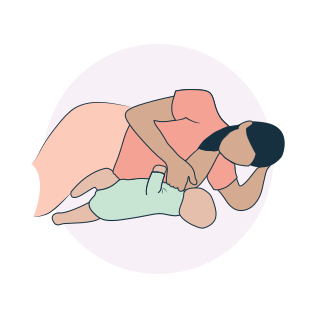
    Side Lying Hold

    Side-Lying Hold

    1. For the right breast, lie on your right side with your baby facing you.
    2. Pull your baby close. Your baby’s mouth should be level with your nipple.
    3. In this position, you can cradle your baby’s back with your left arm and support yourself with your right arm and/or pillows.
    4. Keep loose clothing and bedding away from your baby.
    5. Reverse for the left breast.

    This hold is useful when:

    • You had a C-section
    • You want to rest while baby feeds
    • You are breastfeeding in the middle of the night
    • You and your baby are comfortable in this position
    Wooden carved fork resting on the edge

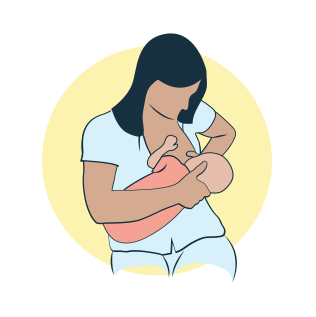
    Cross-Cradle Hold

    1. For the right breast, use your left arm to hold your baby’s head at your right breast and baby’s body toward your left side. A pillow across your lap can help support your left arm.
    2. Gently place your left hand behind your baby’s ears and neck, with your thumb and index finger behind each ear and your palm between baby’s shoulder blades. Turn your baby’s body toward yours so your tummies are touching.
    3. Hold your breast as if you are squeezing a sandwich. To protect your back, avoid leaning down to your baby. Instead, bring your baby to you.
    4. As your baby’s mouth opens, push gently with your left palm on baby’s head to help them latch on. Make sure you keep your fingers out of the way.
    5. Reverse for the left breast.

    This hold is useful when:

    • Your baby is premature
    • Your baby has a weak suck
    • Your baby needs help to stay latched
    • Your baby needs extra head support
    • You and your baby are comfortable in this position
    Woman with shopping bag

    Clutch or “Football” Hold

    1. For the right breast, hold your baby level, facing up, at your right side.
    2. Put your baby’s head near your right nipple and support their back and legs under your right arm.
    3. Hold the base of your baby’s head with your right palm. A pillow underneath your right arm can help support your baby’s weight.
    4. To protect your back, avoid leaning down to your baby. Bring baby to you instead.
    5. Reverse for the left breast.

    This hold is useful when:

    • You had a C-section
    • You have large breasts
    • You have flat or inverted nipples
    • You have a strong milk let-down
    • You are breastfeeding twins
    • Your baby likes to feed in an upright position
    • Your baby has reflux
    • You and your baby are comfortable in this position
    Cartoon-style abstract bird silhouette

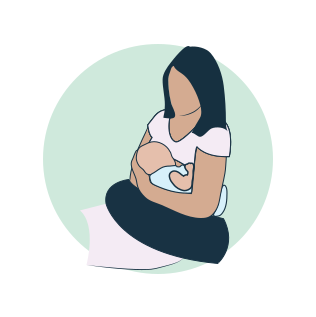
    Cradle Hold

    1. For the right breast, cradle your baby with your right arm. Your baby will be on their left side across your lap, facing you at nipple level.
    2. Your baby’s head will rest on your right forearm with your baby’s back along your inner arm and palm.
    3. Turn your baby’s tummy toward your tummy. Your left hand is free to support your breast, if needed. Pillows can help support your arm and elbow.
    4. To protect your back, avoid leaning down to your baby. Instead, bring your baby to you.
    5. Reverse for the left breast.

    This hold is useful when:

    • Your baby needs help latching on
    • You and your baby are comfortable in this position
    Abstract geometric shapes in pastel

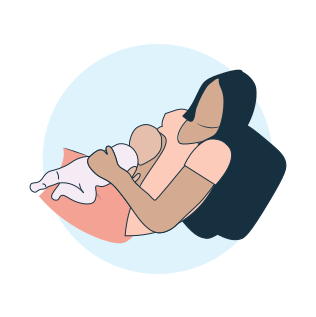
    Laid-Back Hold

    1. Lean back on a pillow with your baby’s tummy touching yours and their head at breast level. Some moms find that sitting up nearly straight works well. Others prefer to lean back and lie almost flat.
    2. You can place your baby’s cheek near your breast, or you may want to use one hand to hold your breast near your baby. It’s up to you and what you think feels best.
    3. Your baby will naturally find your nipple, latch, and begin to suckle.

    This hold is useful when:

    • Your baby is placed on your chest right after birth
    • You have a strong milk let-down
    • You have large breasts
    • You and your baby are comfortable in this position