
Skip to Content Skip to Footer
LiveWell WIC logo
Livewell Wic
  • Home
  • Ellyn Satter
    • Ellyn Satter
      Prenatal / Postpartum
    • Ellyn Satter
      Newborn / Infant
    • Ellyn Satter
      Older Baby / Almost Toddler
    • Ellyn Satter
      Toddler / Preschooler
  • Breastfeeding
  • Eat·Grow·Live Healthy
    • Eat·Grow·Live Healthy
      Women
    • Eat·Grow·Live Healthy
      Infants
    • Eat·Grow·Live Healthy
      Children
    • Eat·Grow·Live Healthy
      Fathers
  • Live Well Blog
  • Español
woman_sleeping-and-stretching_bed

Sleep: Your Superhero for Health

  • Home
  • Live Well Blog
  • Sleep: Your Superhero for Health
November 5, 2025 General /Family

Sleep. Sueño. Sommeil. Sonno. Ngủ. Сон.

No matter how you say it, sleep is important! But in the United States, 1 in 3 adults does not get enough rest, and over 30% of kids and teens aren’t getting the sleep they need.

Sleep is not just “down time.” It helps your body and mind stay healthy. Good sleep can help your appetite, weight, mood, memory, and even safety. Poor sleep can raise your risk for problems like heart disease, high blood pressure, and accidents.

Sleeping_Woman_Bed
Signs You’re Not Getting Enough Sleep
You may be sleep-deprived if you often feel like you could fall asleep when:
watch-tv

Watching TV or reading

sitting-traffic

Sitting in traffic

Sitting_quietly

Sitting quietly after a meal

Sitting still in a classroom, meeting, or movie​

Why Sleep Matters for Kids

  • ✓ Sleep helps the brain learn and remember things.
  • ✓ Deep sleep releases growth hormones that help children grow.
  • Children ages 2–6 who get less than 10 hours of sleep have a higher chance of becoming overweight than kids who sleep 11 or more hours.
  • Not getting enough sleep can make kids hungrier, crave more sweets, and overeat.
  • Kids who don’t get enough sleep may be cranky, sad, or have trouble paying attention.

Sleep and Eating Habits

Not getting enough sleep can make you feel hungrier and crave sugary foods and drinks. A study found that kids who slept one hour less than usual ate more added sugar and drank more sweetened drinks.

What you eat also affects how well you sleep:

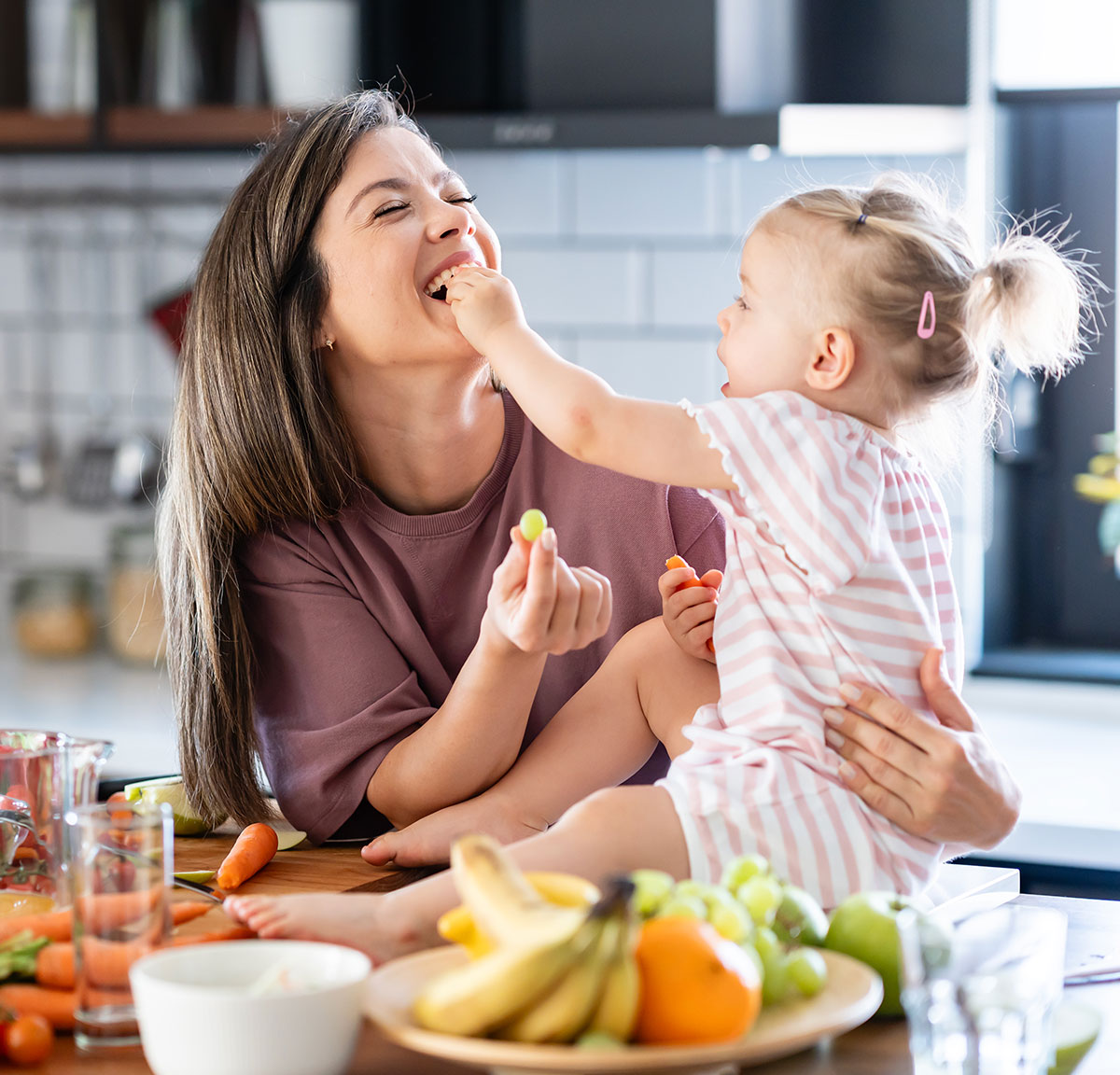
girl_mom_toddler_healthy_food_fruits_Vegetables

Eating fiber-rich foods, whole grains, fruits, and vegetables can help you sleep better.

Eating lots of added sugars and white/refined grains (like white bread, pasta, cookies, or cake) can make it harder to sleep well.

Healthy_Sleep

Healthy Sleep Habits for Families:

  • ✓ Go to bed and wake up at the same time every day.
  • ✓ Turn off TVs, phones, and tablets at least 30 minutes before bed.
  • ✓ Avoid caffeine in the afternoon.
  • ✓ Avoid big meals or alcohol close to bedtime.
  • ✓ Eat a healthy diet and move your body each day.
  • ✓ Spend time outside—sunlight helps set your body’s sleep clock.

How Much Sleep Is Needed?

Age Hours of Sleep Needed
Newborn
 4-7 Days baby
14-17 hours  4-7 Days baby
Infant
 10-14 Days baby
12-16 hours  4-7 Days baby including naps
Toddler
2-3 Months baby
11-14 hours  4-7 Days baby including naps
Preschool
 3-6 Months baby
10-13 hours  4-7 Days baby including naps
School
4 Months baby
9-12 hours  4-7 Days baby
Teen
 6-8 Months  baby
8-10 hours 4-7 Days baby
Adult
One Year baby
7 or more hours  4-7 Days baby
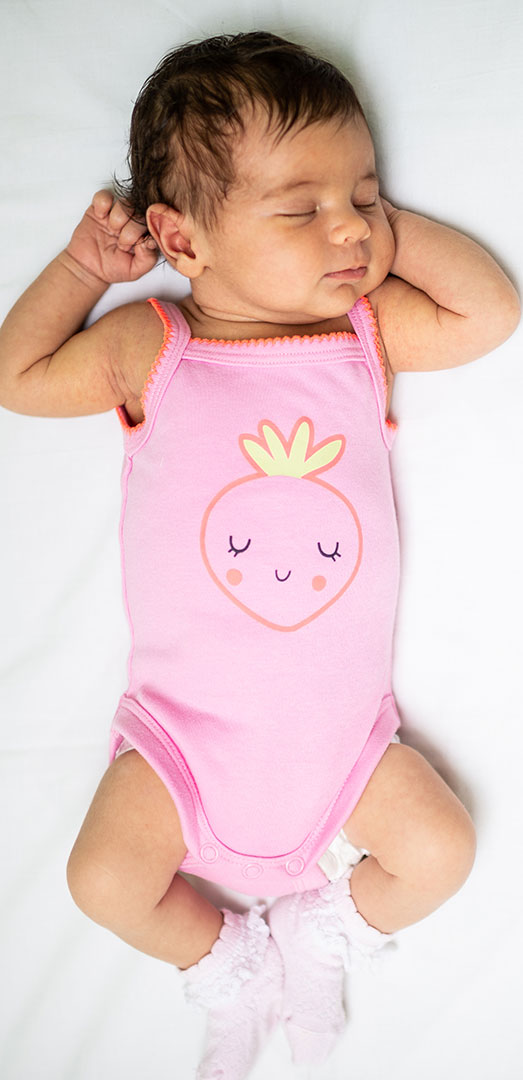
baby_infant_girl_sleeping_crib
tree_moon

Encouraging good sleep is one of the best things you can do for your family’s health. It helps kids grow, keeps moods steady, and supports a healthy weight.

Good sleep + Healthy eating + Active play =
A strong foundation for your child’s future.

REFERENCES:

Centers for Disease Control and Prevention. About Sleep. (2024, May 15).
https://www.cdc.gov/sleep/about/index.html#:~:text=Going%20to%20bed%20and%20getting,and%20maintaining%20a%20healthy%20diet.

National Heart, Lung, and Blood Institute. How sleep affects your health. (2022, June 15).
https://www.nhlbi.nih.gov/health/sleep-deprivation/health-effects

National Heart, Lung, and Blood Institute. What Are Sleep Deprivation and Deficiency?
(2022, March 24).
https://www.nhlbi.nih.gov/health/sleep-deprivation#:~:text=Sleep%20deficiency%20is%20linked%20to,adults%2C%20teens%2C%20and%20children.

National Library of Medicine. Effects of light on human circadian rhythms, sleep, and mood. (2019, August 20).
https://pmc.ncbi.nlm.nih.gov/articles/PMC6751071/#:~:text=The%20relative%20contributions%20of%20light,intensities)%20is%20beneficial%20for%20sleep

National Library of Medicine. Increased Hunger, Food Cravings, Food Reward, and Portion Size Selection after Sleep Curtailment in Women Without Obesity. (2019, March 19).
https://pmc.ncbi.nlm.nih.gov/articles/pmid/30893841/

National Library of Medicine. Sleep Deprivation and Central Appetite Regulation.
(2022, December 7).
https://pmc.ncbi.nlm.nih.gov/articles/PMC9783730/

National Library of Medicine. Sleep restriction increases the neuronal response to unhealthy food in normal-weight individuals. (2014, March 14).
https://pmc.ncbi.nlm.nih.gov/articles/PMC3883872/#R8

The American Journal of Clinical Nutrition. High glycemic index and glycemic load diets as risk factors for insomnia: analysis from the Women’s Health Initiative. (2020, February).
https://ajcn.nutrition.org/article/S0002-9165(22)01018-8/fulltext

Author: Bridget Swinney MS, RDN, LD

You May Also Like...

March 18, 2026

The 2025-2030 Dietary Guidelines for Americans – What Families Need to Know

The 2025-2030 Dietary Guidelines for AmericansEvery five years, nutrition experts update the Dietary Guidelines for Americans to share the best advice on healthy eating. The 2025–2030 Dietary Guidelines help families…

Read More
1
February 11, 2026

Finding Calm When Life Gets Busy: Stress-Management for Parents

Finding Calm When Life Gets Busy Parenting is full of love, joy, and often times, stress. Between caring for little ones, managing meals, grocery shopping, budgets, jobs, and everything else,…

Read More
2
February 4, 2026

February Is National Heart Month: Simple Ways to Show Your Heart Some Love

Simple Ways to Show Your Heart Some Love Your heart works hard for you every single day.February is National Heart Month – a great time to learn small, simple ways…

Read More
2
  • Infant
    • When to Start Peanut and Egg to Help Prevent Allergies
    • The Basics of Paced Bottle-Feeding
    • How Do I Know If My Baby Could Be Tongue-Tied?
    • Protect Your Baby from Cronobacter
    • Exploring the World with Baby – Sensory Play
  • Children
    • Shopping With Kids: A Simple Way to Help Them Like More Foods
    • Pumpkin Fun: Free and Healthy Activities for Kids Under 5
    • Letting Your Child Play with Food Can Be a Good Thing
    • Is Snack Time Treat Time?
    • Fun Ways to Learn About Healthy Food and Get Moving!
  • General /Family
    • The 2025-2030 Dietary Guidelines for Americans – What Families Need to Know
    • Finding Calm When Life Gets Busy: Stress-Management for Parents
    • February Is National Heart Month: Simple Ways to Show Your Heart Some Love
    • 10 Ways to Enjoy Avocados – And Helpful Tips to Feed with Confidence
    • Food, Feelings, and Finding Balance: Understanding Disordered Eating
  • Women
    • Newborn Hunger Cues: How to Know When Your Baby Is Hungry or Full
    • How to Know Your Baby Is Getting Enough Breastmilk
    • Breastfeeding Through Growth Spurts and Sleep Changes
    • Baby Blues… or Is It Something More?
    • Gut Health and Gestational Diabetes
  • Recipes
    • Heart-Healthy Recipe: Banana Berry Oatmeal Cups
    • Is the Chia Seed Challenge Worth It?
    • Extra Vegetables Quiche
    • Easy Pumpkin Muffins
    • Confetti Bean Salad
LiveWell WIC program logo

    Contact Us

USDA is an equal opportunity provider, employer, and lender.

Cookie PolicyAbout UsPrivacy PolicyTerms of Agreement

© Brush Art Corporation

  • Email
  • SMS
If you are using multiple emails, separate them with commas.

    SMS Communication Consent

    Share

    Share this link via:

    Side Lying Hold

    Side-Lying Hold

    1. For the right breast, lie on your right side with your baby facing you.
    2. Pull your baby close. Your baby’s mouth should be level with your nipple.
    3. In this position, you can cradle your baby’s back with your left arm and support yourself with your right arm and/or pillows.
    4. Keep loose clothing and bedding away from your baby.
    5. Reverse for the left breast.

    This hold is useful when:

    • You had a C-section
    • You want to rest while baby feeds
    • You are breastfeeding in the middle of the night
    • You and your baby are comfortable in this position
    Wooden carved fork resting on the edge

    Cross-Cradle Hold

    1. For the right breast, use your left arm to hold your baby’s head at your right breast and baby’s body toward your left side. A pillow across your lap can help support your left arm.
    2. Gently place your left hand behind your baby’s ears and neck, with your thumb and index finger behind each ear and your palm between baby’s shoulder blades. Turn your baby’s body toward yours so your tummies are touching.
    3. Hold your breast as if you are squeezing a sandwich. To protect your back, avoid leaning down to your baby. Instead, bring your baby to you.
    4. As your baby’s mouth opens, push gently with your left palm on baby’s head to help them latch on. Make sure you keep your fingers out of the way.
    5. Reverse for the left breast.

    This hold is useful when:

    • Your baby is premature
    • Your baby has a weak suck
    • Your baby needs help to stay latched
    • Your baby needs extra head support
    • You and your baby are comfortable in this position
    Woman with shopping bag

    Clutch or “Football” Hold

    1. For the right breast, hold your baby level, facing up, at your right side.
    2. Put your baby’s head near your right nipple and support their back and legs under your right arm.
    3. Hold the base of your baby’s head with your right palm. A pillow underneath your right arm can help support your baby’s weight.
    4. To protect your back, avoid leaning down to your baby. Bring baby to you instead.
    5. Reverse for the left breast.

    This hold is useful when:

    • You had a C-section
    • You have large breasts
    • You have flat or inverted nipples
    • You have a strong milk let-down
    • You are breastfeeding twins
    • Your baby likes to feed in an upright position
    • Your baby has reflux
    • You and your baby are comfortable in this position
    Cartoon-style abstract bird silhouette

    Cradle Hold

    1. For the right breast, cradle your baby with your right arm. Your baby will be on their left side across your lap, facing you at nipple level.
    2. Your baby’s head will rest on your right forearm with your baby’s back along your inner arm and palm.
    3. Turn your baby’s tummy toward your tummy. Your left hand is free to support your breast, if needed. Pillows can help support your arm and elbow.
    4. To protect your back, avoid leaning down to your baby. Instead, bring your baby to you.
    5. Reverse for the left breast.

    This hold is useful when:

    • Your baby needs help latching on
    • You and your baby are comfortable in this position
    Abstract geometric shapes in pastel

    Laid-Back Hold

    1. Lean back on a pillow with your baby’s tummy touching yours and their head at breast level. Some moms find that sitting up nearly straight works well. Others prefer to lean back and lie almost flat.
    2. You can place your baby’s cheek near your breast, or you may want to use one hand to hold your breast near your baby. It’s up to you and what you think feels best.
    3. Your baby will naturally find your nipple, latch, and begin to suckle.

    This hold is useful when:

    • Your baby is placed on your chest right after birth
    • You have a strong milk let-down
    • You have large breasts
    • You and your baby are comfortable in this position