Skip to Content Skip to Footer
LiveWell WIC logo
Livewell Wic
  • Home
  • Ellyn Satter
    • Ellyn Satter
      Prenatal / Postpartum
    • Ellyn Satter
      Newborn / Infant
    • Ellyn Satter
      Older Baby / Almost Toddler
    • Ellyn Satter
      Toddler / Preschooler
  • Breastfeeding
  • Eat·Grow·Live Healthy
    • Eat·Grow·Live Healthy
      Women
    • Eat·Grow·Live Healthy
      Infants
    • Eat·Grow·Live Healthy
      Children
    • Eat·Grow·Live Healthy
      Fathers
  • Live Well Blog
  • Español
Children eating watermelon, wearing festive hats, flags nearby

Healthy Red, White, and Blue Snacks for Kids

  • Home
  • Live Well Blog
  • Healthy Red, White, and Blue Snacks for Kids
July 1, 2026 Recipes

executive chef Red, White, and Blue Snacks Kids Will Love This July 4th

July 4th is a fun time to celebrate with family, friends, and yummy food. But holiday snacks don’t have to be full of sugar to feel special. With a few colorful fruits and simple ingredients, you can make fun treats your kids will be excited to eat – and you feel proud to offer.

Below are some easy, festive snack ideas that are great for cookouts, parties, picnics, or fun family time at home.

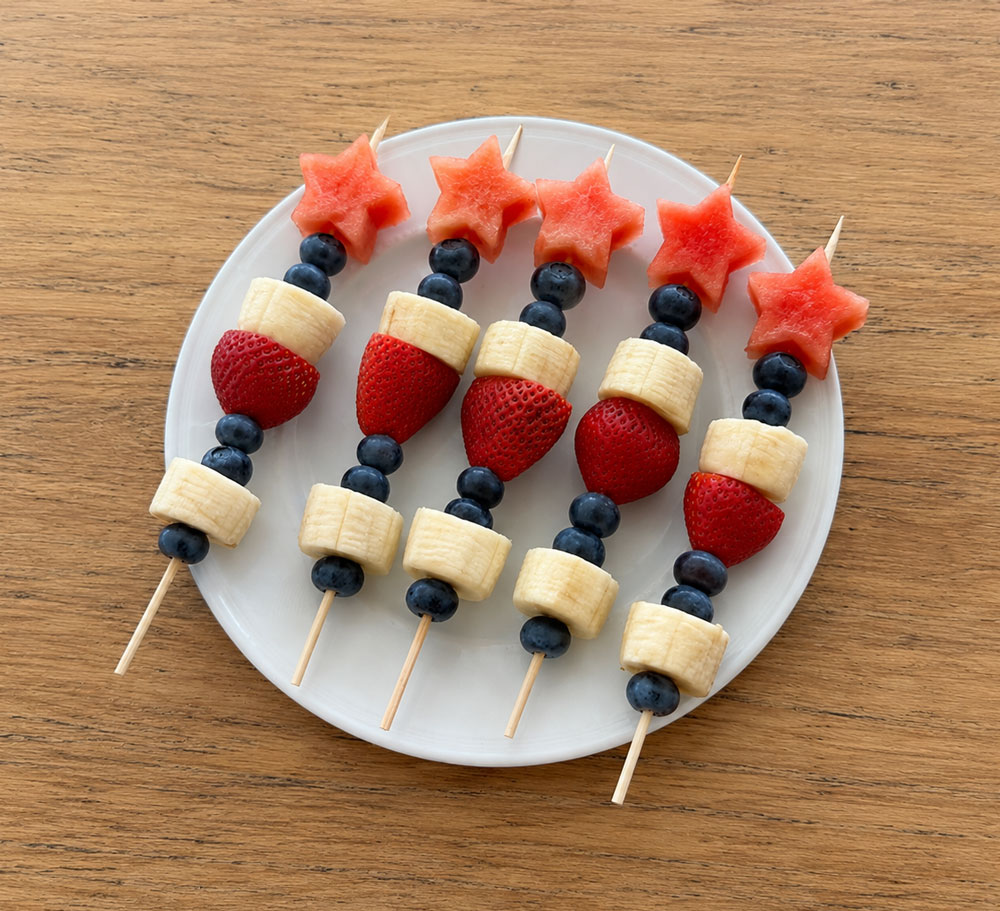
Star Berry Berry Fun Fruit Kabobs

Fruit kabobs are colorful, healthy, and easy for little hands to hold. Use cookie cutters to make fun star shapes from watermelon. Let kids help build their own kabobs for extra fun.

Try using:
  • Strawberries
  • Blueberries
  • Banana slices
  • Watermelon stars
Fruit skewers with watermelon stars, berries, and banana
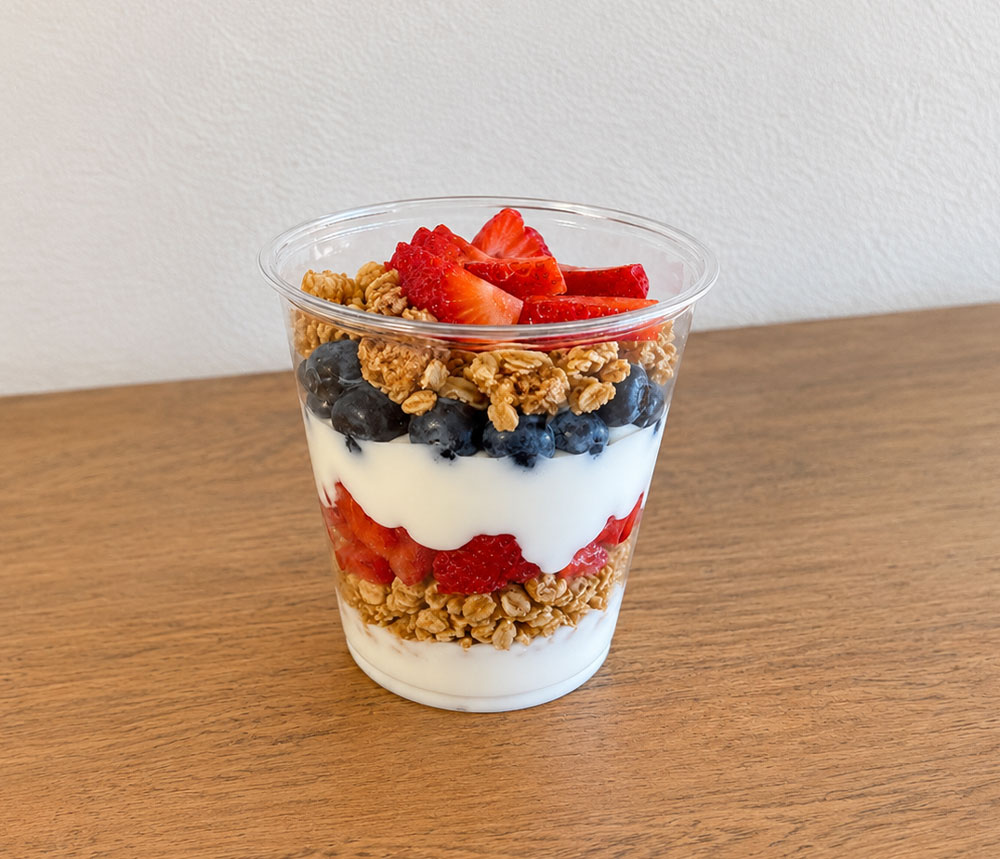
Yogurt parfait with berries and granola in cup

Strawberry fruit outline Patriotic Yogurt Parfaits

These parfaits make a fun breakfast, snack, or dessert. Layer ingredients in a clear cup to create red, white, and blue stripes.

Try using:
  • Vanilla yogurt
  • Strawberries or raspberries
  • Blueberries
  • Low-sugar granola

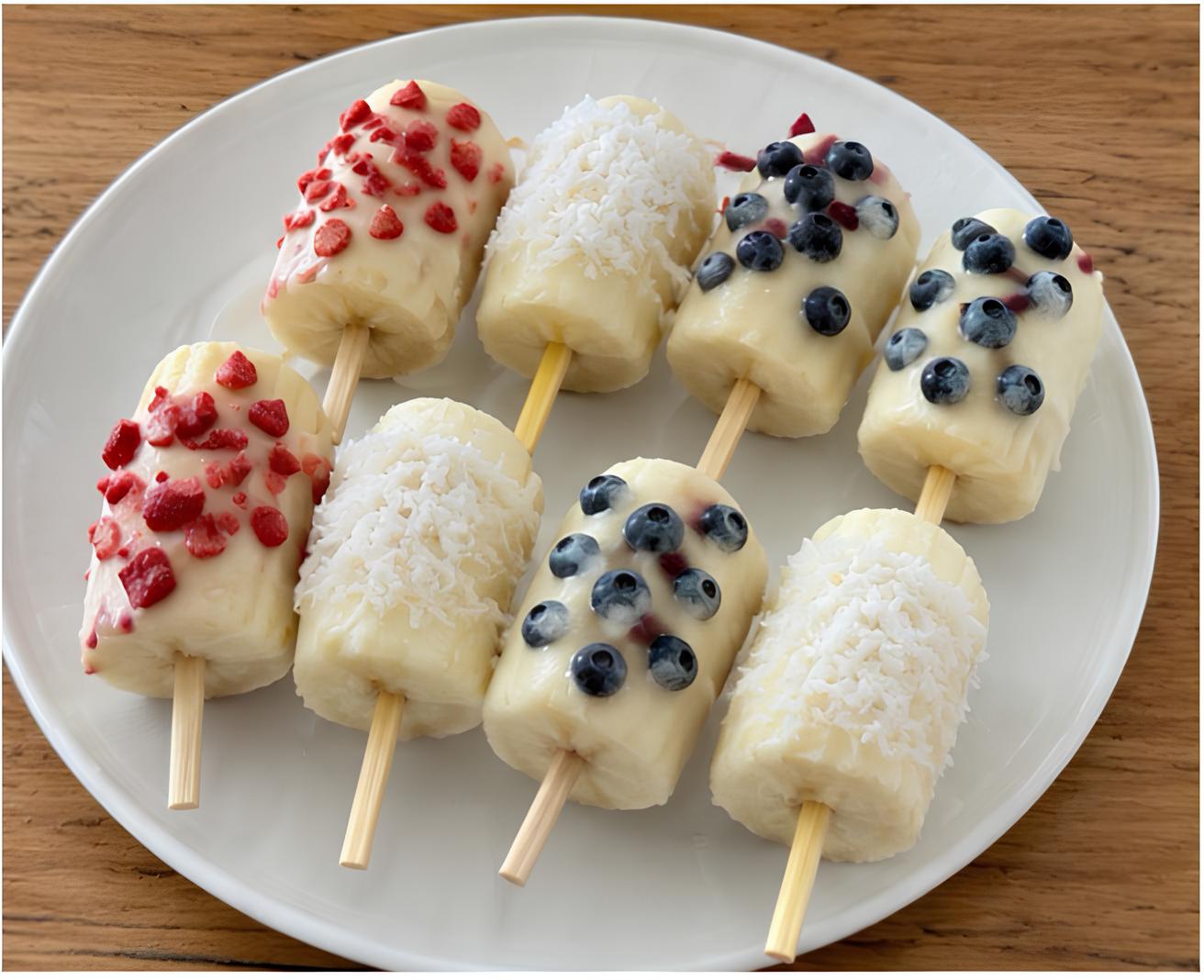
Frozen Banana Frozen Banana Pops

Step #1

Peel bananas and cut them in half. Stick a popsicle stick into each piece and freeze for about 1 hour.

Step #2

Dip frozen bananas in yogurt, then roll with:

  • Crushed strawberries
  • Blueberries
  • Unsweetened coconut
Step #3

Freeze again until firm for a cool summer treat.

Banana pops topped with berries and coconut on plate
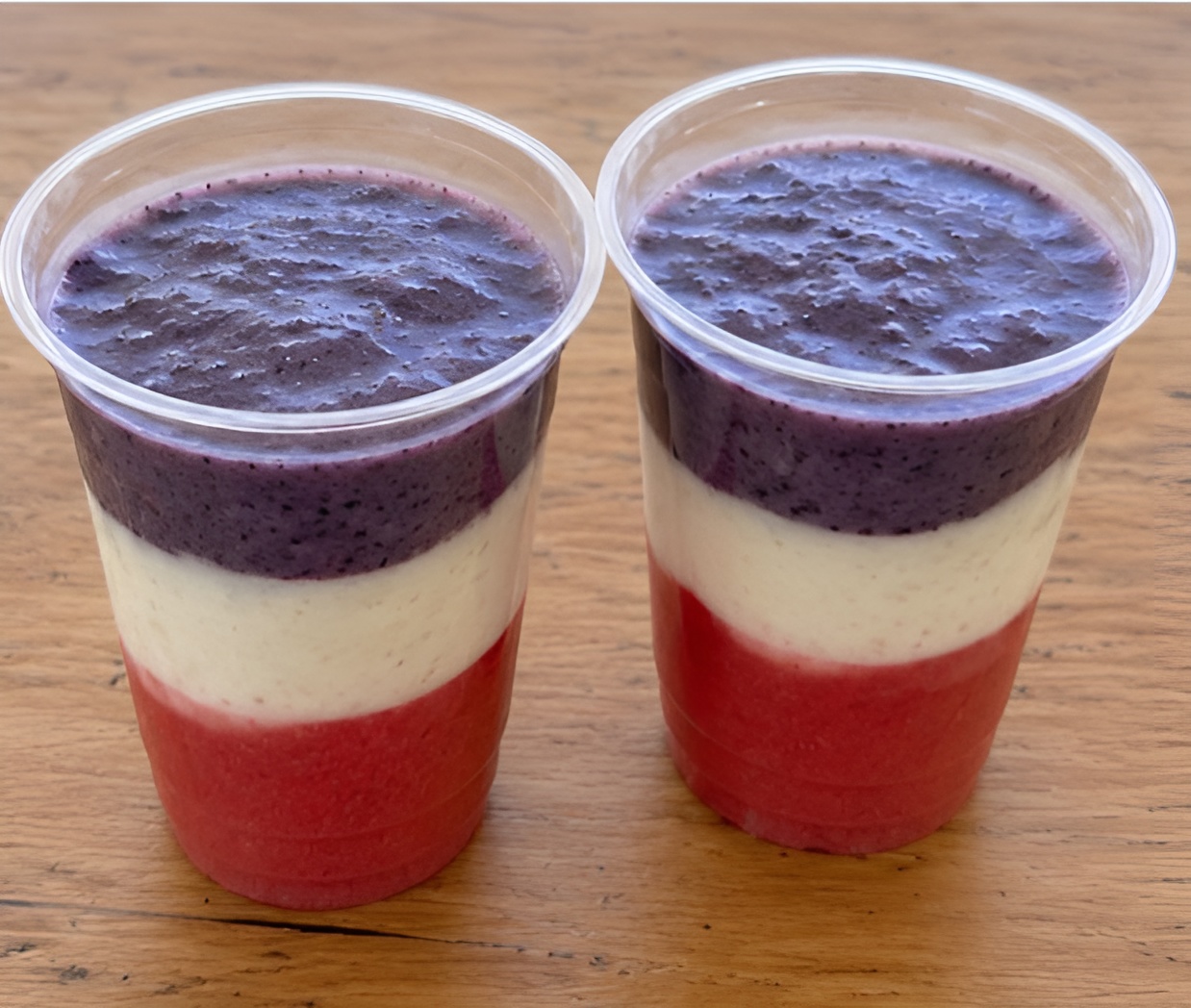
Two layered smoothies in clear plastic cups

building sketch Red, White, and Blue Smoothies

Blend fruit into a colorful smoothie kids can enjoy outside on a hot day. For extra fun, layer the colors carefully in a clear cup.

Try blending, then layering:
  • Strawberries, raspberries, or watermelon
  • Bananas with milk or yogurt
  • Blueberries or wild berries

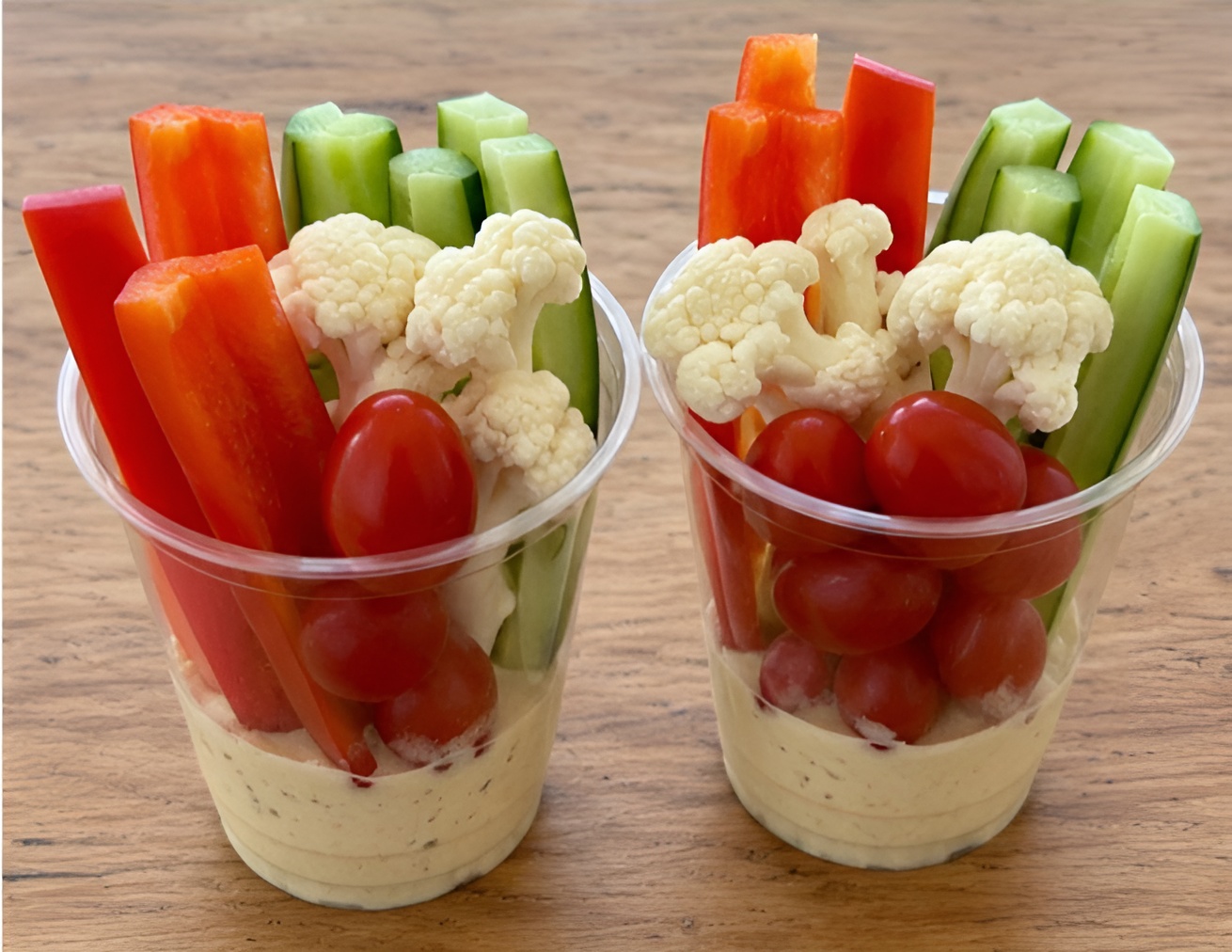
forming tree Firecracker Veggie Cups

Fill small cups with colorful veggies and a healthy dip, like hummus or ranch, at the bottom of the cup for easy snacking.

Try using:
  • Red bell peppers
  • Cauliflower
  • Cucumbers
  • Cherry tomatoes
Two cups filled with fresh vegetables and hummus
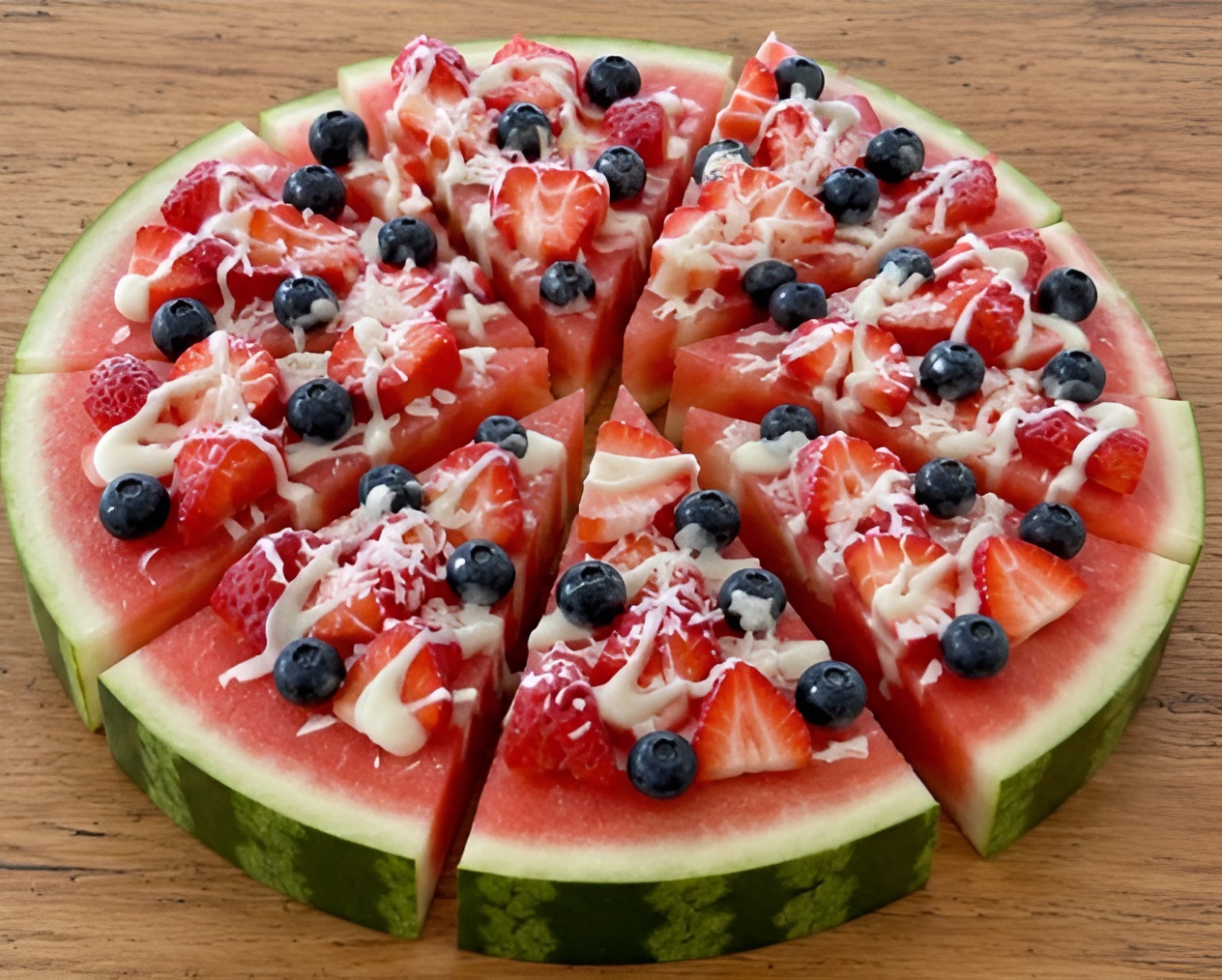
Watermelon slices topped with berries and shredded coconut

watermelon pizza Watermelon Pizza

Step #1

Slice a large round piece of seedless watermelon and decorate it like a pizza with “toppings” like:

  • Blueberries
  • Sliced strawberries
  • Yogurt drizzle
  • Shredded coconut
Step #2

Cut into “pie” slices and serve cold.

intertwining gracefully across Celebrate Together

Healthy snacks can still feel exciting and fun. Bright colors, simple ingredients, and hands-on activities help kids enjoy trying new foods. This July 4th, celebrate with snacks that help your family feel happy, fueled, and ready for summer fun!

To help prevent choking, always cut cherry tomatoes, blueberries, and other round foods into smaller pieces for young children.

Quick Safety Tip!
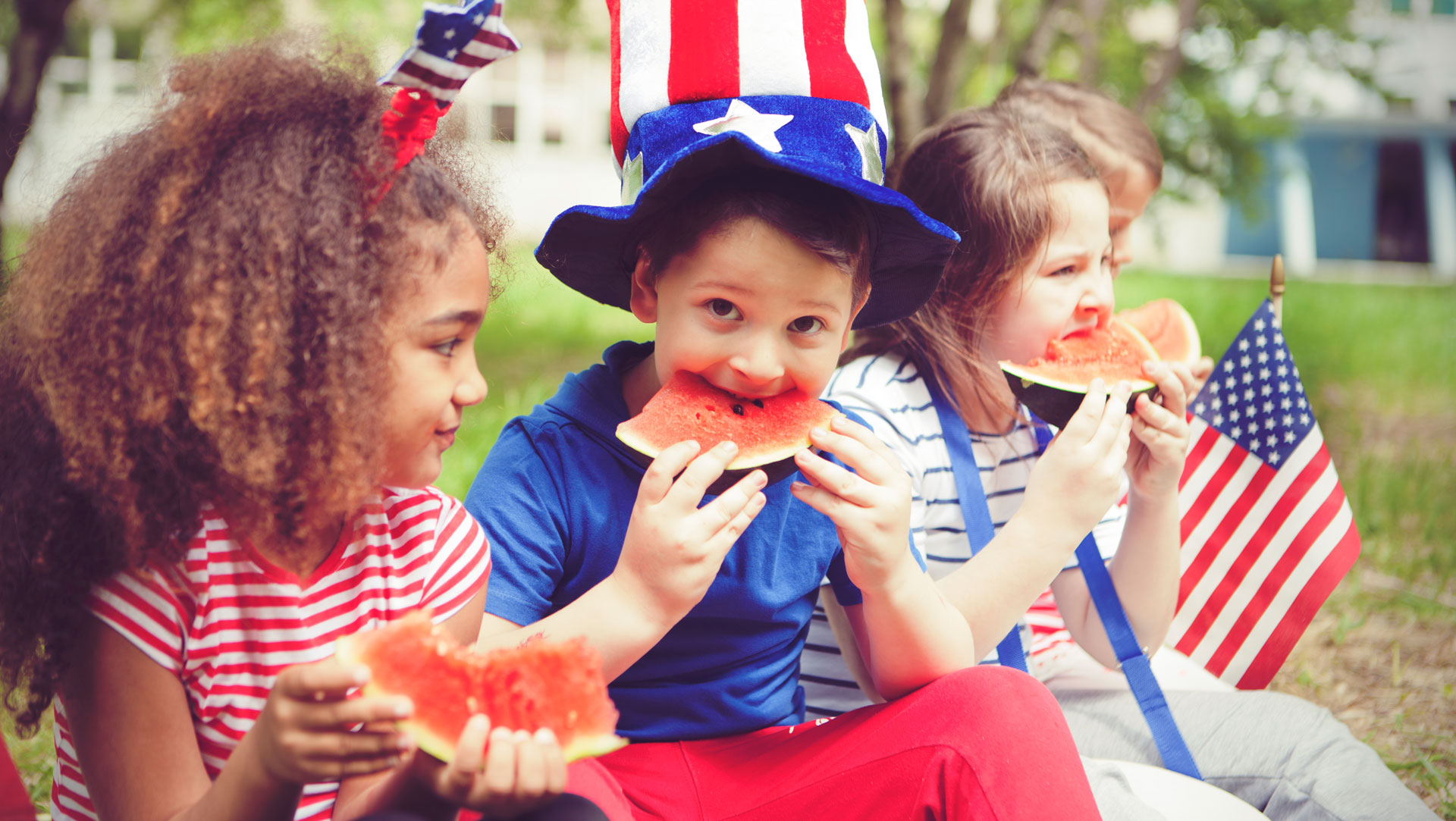
Child smiling, eating watermelon, wearing patriotic headband

REFERENCES:

American Academy of Pediatrics. HealthyChildren.org. (2026). Choosing Health Snacks for Children.
https://www.healthychildren.org/English/healthy-living/nutrition/Pages/Choosing-Healthy-Snacks-for-Children.aspx

American Academy of Pediatrics. (2021, January 1). Right From the Start: ABCs of Good Nutrition for Young Children.
https://www.pediatrics5280.com/nutrition/Right-From-the-Start-ABCs-of-Good-Nutrition-for-Yo

Author: Amanda Hojnacki

You May Also Like...

June 17, 2026

Simple Meals with Canned Fish: Easy, Healthy & Budget-Friendly Ideas

Simple Meals with Canned Fish Canned fish is a quick, easy, and affordable way to add healthy protein to your meals. Options like tuna, salmon, and sardines are packed with…

Read More
1
May 6, 2026

Fresh & Easy Spring Snacks for Toddlers

Fresh & Easy Springtime Snacks for Toddlers Spring is a great time to enjoy fresh, colorful foods. Many fruits and vegetables are in season, and they make perfect snacks for…

Read More
1
April 22, 2026

Fresh & Easy Spring Veggie Pasta

A Simple, Colorful Meal Your Whole Family Can Enjoy Spring is a great time to add fresh flavors and bright colors to your family’s meals. As the weather warms up,…

Read More
1
WATCH VIDEOS
  • Infant
    • Infant Pacifiers: Benefits, Safety Tips, and When to Wean
    • When to Start Peanut and Egg to Help Prevent Allergies
    • The Basics of Paced Bottle-Feeding
    • How Do I Know If My Baby Could Be Tongue-Tied?
    • Protect Your Baby from Cronobacter
  • Children
    • Shopping With Kids: A Simple Way to Help Them Like More Foods
    • Pumpkin Fun: Free and Healthy Activities for Kids Under 5
    • Letting Your Child Play with Food Can Be a Good Thing
    • Is Snack Time Treat Time?
    • Fun Ways to Learn About Healthy Food and Get Moving!
  • General /Family
    • Meet the Milks: Dairy and Plant-Based Choices
    • Avoiding Food Waste
    • The 2025-2030 Dietary Guidelines for Americans – What Families Need to Know
    • Finding Calm When Life Gets Busy: Stress-Management for Parents
    • February Is National Heart Month: Simple Ways to Show Your Heart Some Love
  • Women
    • Common Breastfeeding Challenges and Simple Solutions for Parents
    • Paced Bottle-Feeding: How to Feed Your Baby the Right Way
    • Breastfeeding and Returning to Work: Tips for Pumping & Planning
    • Increasing Milk Supply: Myths vs. Facts About Breastfeeding
    • Pumping Basics & Safe Breast Milk Storage Guide
  • Recipes
    • Simple Meals with Canned Fish: Easy, Healthy & Budget-Friendly Ideas
    • Fresh & Easy Spring Snacks for Toddlers
    • Fresh & Easy Spring Veggie Pasta
    • Heart-Healthy Recipe: Banana Berry Oatmeal Cups
    • Is the Chia Seed Challenge Worth It?
LiveWell WIC program logo

Contact Us

USDA is an equal opportunity provider, employer, and lender.

Cookie PolicyAbout UsPrivacy PolicyTerms of Agreement

© Brush Art Corporation

  • Email
  • SMS
If you are using multiple emails, separate them with commas.

    SMS Communication Consent

    Share

    Share this link via:

    Cartoon vegetables with leafy tops gather playfully together.

    Side-Lying Hold

    1. For the right breast, lie on your right side with your baby facing you.
    2. Pull your baby close. Your baby’s mouth should be level with your nipple.
    3. In this position, you can cradle your baby’s back with your left arm and support yourself with your right arm and/or pillows.
    4. Keep loose clothing and bedding away from your baby.
    5. Reverse for the left breast.

    This hold is useful when:

    • You had a C-section
    • You want to rest while baby feeds
    • You are breastfeeding in the middle of the night
    • You and your baby are comfortable in this position
    Yellow circle with abstract, jagged shapes and patterns.

    Cross-Cradle Hold

    1. For the right breast, use your left arm to hold your baby’s head at your right breast and baby’s body toward your left side. A pillow across your lap can help support your left arm.
    2. Gently place your left hand behind your baby’s ears and neck, with your thumb and index finger behind each ear and your palm between baby’s shoulder blades. Turn your baby’s body toward yours so your tummies are touching.
    3. Hold your breast as if you are squeezing a sandwich. To protect your back, avoid leaning down to your baby. Instead, bring your baby to you.
    4. As your baby’s mouth opens, push gently with your left palm on baby’s head to help them latch on. Make sure you keep your fingers out of the way.
    5. Reverse for the left breast.

    This hold is useful when:

    • Your baby is premature
    • Your baby has a weak suck
    • Your baby needs help to stay latched
    • Your baby needs extra head support
    • You and your baby are comfortable in this position
    Cat playing with butterfly in a garden.

    Clutch or “Football” Hold

    1. For the right breast, hold your baby level, facing up, at your right side.
    2. Put your baby’s head near your right nipple and support their back and legs under your right arm.
    3. Hold the base of your baby’s head with your right palm. A pillow underneath your right arm can help support your baby’s weight.
    4. To protect your back, avoid leaning down to your baby. Bring baby to you instead.
    5. Reverse for the left breast.

    This hold is useful when:

    • You had a C-section
    • You have large breasts
    • You have flat or inverted nipples
    • You have a strong milk let-down
    • You are breastfeeding twins
    • Your baby likes to feed in an upright position
    • Your baby has reflux
    • You and your baby are comfortable in this position
    Peach circle with abstract shapes radiating outward.

    Cradle Hold

    1. For the right breast, cradle your baby with your right arm. Your baby will be on their left side across your lap, facing you at nipple level.
    2. Your baby’s head will rest on your right forearm with your baby’s back along your inner arm and palm.
    3. Turn your baby’s tummy toward your tummy. Your left hand is free to support your breast, if needed. Pillows can help support your arm and elbow.
    4. To protect your back, avoid leaning down to your baby. Instead, bring your baby to you.
    5. Reverse for the left breast.

    This hold is useful when:

    • Your baby needs help latching on
    • You and your baby are comfortable in this position
    Smiling peach character waving cheerful hello.

    Laid-Back Hold

    1. Lean back on a pillow with your baby’s tummy touching yours and their head at breast level. Some moms find that sitting up nearly straight works well. Others prefer to lean back and lie almost flat.
    2. You can place your baby’s cheek near your breast, or you may want to use one hand to hold your breast near your baby. It’s up to you and what you think feels best.
    3. Your baby will naturally find your nipple, latch, and begin to suckle.

    This hold is useful when:

    • Your baby is placed on your chest right after birth
    • You have a strong milk let-down
    • You have large breasts
    • You and your baby are comfortable in this position