

Skip to Content Skip to Footer
LiveWell WIC logo
Livewell Wic
  • Home
  • Ellyn Satter
    • Ellyn Satter
      Prenatal / Postpartum
    • Ellyn Satter
      Newborn / Infant
    • Ellyn Satter
      Older Baby / Almost Toddler
    • Ellyn Satter
      Toddler / Preschooler
  • Breastfeeding
  • Eat·Grow·Live Healthy
    • Eat·Grow·Live Healthy
      Women
    • Eat·Grow·Live Healthy
      Infants
    • Eat·Grow·Live Healthy
      Children
    • Eat·Grow·Live Healthy
      Fathers
  • Live Well Blog
  • Español
Family playing frisbee in a sunny park

Beat the Heat this Summer!

  • Home
  • Live Well Blog
  • Beat the Heat this Summer!
September 4, 2024 General /Family

Sun with numerous rays illustrated in abstract design

With record-high temperatures and extreme weather happening more often, staying cool is a priority, especially when you have little ones and when you’re pregnant.

Staying Hydrated

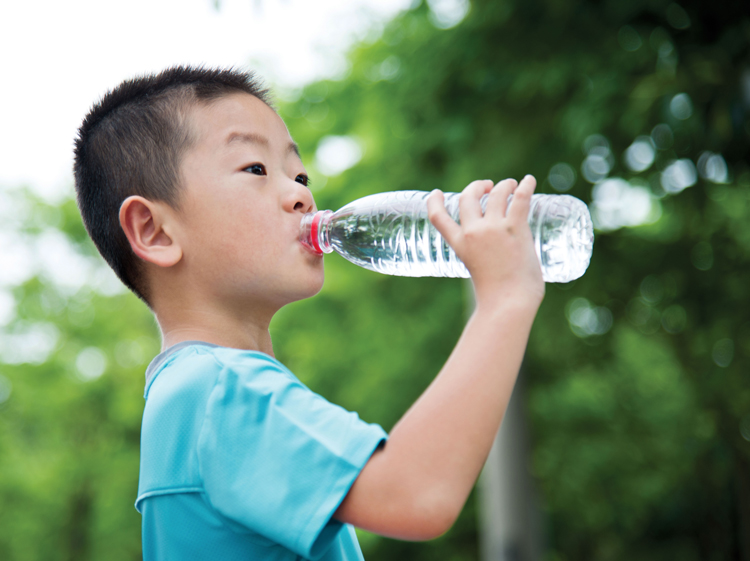
Drinking plenty of fluids is key when it’s hot! Water is best. Limit drinks high in sugar and caffeine, as these can make your body lose fluid, leading to dehydration. It’s also best to limit sports drinks unless you are sweating for multiple hours.

Child drinking from a water bottle outdoors
Text Drink Water! on pastel blue circle background

The best thing you can do for mild dehydration is drink more water. Severe dehydration needs immediate medical treatment at a hospital. This may require giving fluids through an intravenous drip (a needle in your arm).
Some signs of dehydration include:

  • Cold, clammy skin
  • Dizziness or feeling lightheaded
  • Rapid heart rate
  • Muscle cramps
  • Nausea
  • Darker-colored urine
  • Thirst
  • Preterm contractions

Planning to Stay Cool

Clock with moving blue hour, minute, second hands

Plan outside activities for early in the day. This means everyone needs to get to bed on time so they can get up early. It also means planning meals ahead of time so you’re not eating dinner too late or rushing through breakfast.


Plan cool activities like taking your children for swimming lessons, or visiting a public swimming pool, lake, or splash pad.

Child in pool smiling, adult nearby in water

Your local mall or recreation center likely have air conditioning. Visit these places at the hottest times of the day to stay cool while staying physically active.

Blue ellipse with abstract dark shapes and Shade text

Keep your parked car cooler by using a windshield shade and parking in an area shaded by trees or other surroundings.
Leather and vinyl car seats can burn skin in the summer. Keep towels in the car to sit on.

Colorful abstract shapes overlaying each other

Pregnant? It’s Even More Important to Stay Cool!

Heat exposure during pregnancy has been linked to preterm births, stillbirths, and low birthweight infants. During the first trimester, heat exposure may increase the risk of certain birth defects.

Managing Indoor Heat

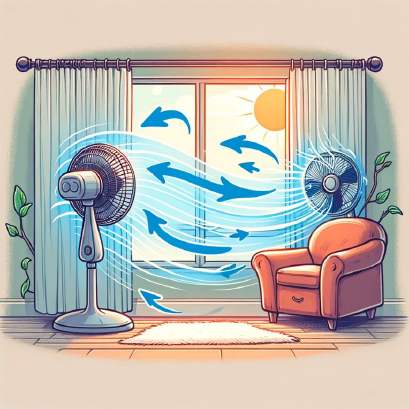
Two fans circulate air in sunny room

You can bring cool air in and push warm air out by using two fans in front of two windows. In the room you want to cool, place one fan to blow air out one window, and the other fan to blow air in from another window. This will create a nice cross breeze. If possible, put the inward-facing fan in front of a window that’s in the shade.

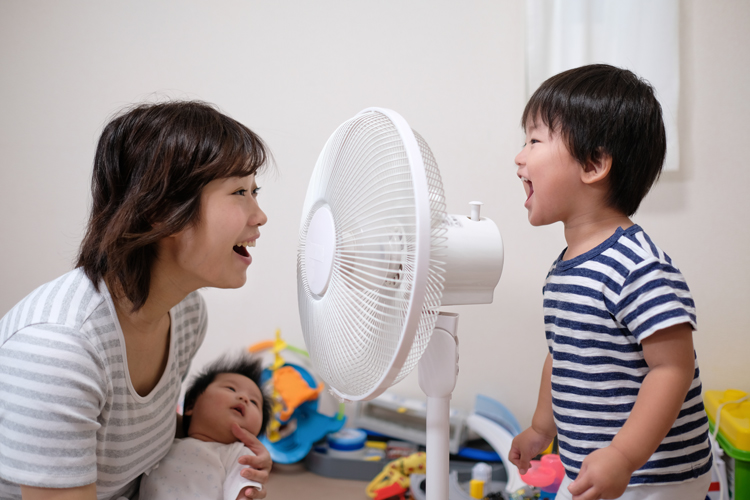
Mother and child laughing near oscillating table fan

Open windows in the morning or evening if it’s cooler outside. When it warms up, close windows and shades to keep the sun and heat out.

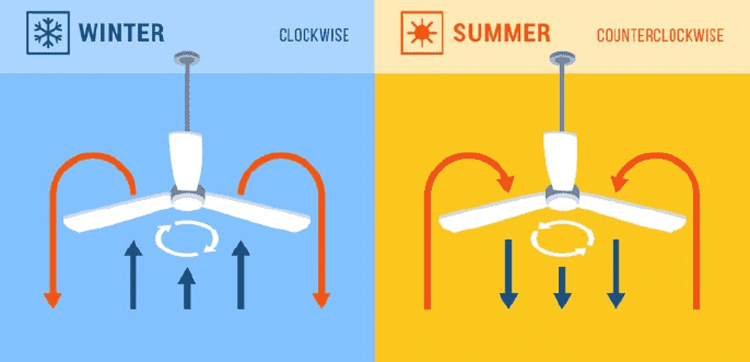
Ceiling fan directions for winter and summer usage

Make sure your ceiling fan is turning counterclockwise to keep hot air near the ceiling and cooler air below, where you want it. In the winter months, set your ceiling fan to turn clockwise to do the opposite.

When windows are closed, fans don’t cool the room, they cool the people in the room. Save energy (and money) by turning fans off when you leave a room.

Consider doing meal prep in the morning, when temperatures are usually cooler. Avoid using the oven if possible or only use it during the coolest part of the day. Instead use the microwave, slow cooker, toaster oven, or stove top.

DIY Air Conditioner!

Circle with text and arrows, snowflake illustration

Place a fan on the floor with a towel in front of it. Then put a container, bucket or roasting pan filled with ice on top of the towel, directly in front of the fan. The fan will slowly melt the ice and blow out cool, refreshing air.

Managing Outdoor Heat

Dress yourself and your family in loose, lightweight, light-colored clothing.

Bring a water bottle along for everyone in the family.

If the temperature outside is cooler than inside, try eating or reading outside under the shade. Consider taking a fan outside with you, if there’s a safe place to plug it in.

Check out personal fans and handheld misting fans to use when outside. You can also wet a scarf or bandana in cold water then loosely drape it around your neck.

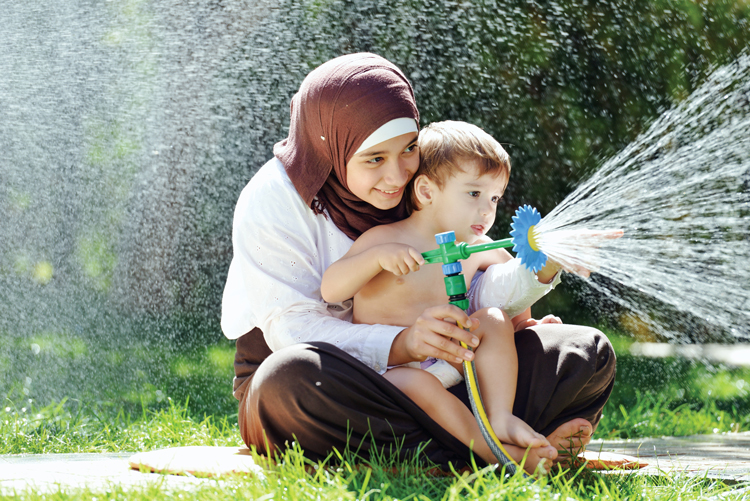
Woman and child playing with garden hose outdoors
Abstract shapes in pastel colors overlap and interact

Do you remember running through the sprinkler when you were a kid? Create the same vibe by attaching a simple rotating sprinkler to your garden hose and have fun staying cool!

Cream circle with handwritten text Hot Tip!

Check out the HeatRisk Tool from the U.S. Center for Disease Control, and Prevention, where you can find the heat risk and air quality (and how to deal with it) in your town.

Never leave a child in a car in the heat. Even when the outside temperature is 80o F, the car temperature can quickly increase to 120o F!

REFERENCES:

Centers for Disease Control. Beat the Heat Infographic:
https://www.cdc.gov/extreme-heat/media/pdf/beat-the-heat-2017.pdf

National Library of Medicine. Pregnancy and Heat Exposure: A Comprehensive Review
on Hot Ambient Temperature and its Impacts on Adverse Pregnancy Outcomes:
https://www.ncbi.nlm.nih.gov/pmc/articles/PMC10298495/

Centers for Disease Control. Clinical Overview of Heat and Pregnancy:
https://www.cdc.gov/heat-health/hcp/clinical-overview/heat-and-pregnant-women.html?CDC_AAref_Val=https://www.cdc.gov/heat-health/hcp/heat-and-pregnant-women.html

Centers for Disease Control HeatRisk Tool:
https://ephtracking.cdc.gov/Applications/HeatRisk/

The Spruce. How to Use Fans to Cool a Room:
https://www.thespruce.com/do-fans-cool-a-room-5271790#:~:text=Move%20cool%20air%20into%20the,line%20from%20the%20first%20windo.

You May Also Like...

May 20, 2026

Meet the Milks: Dairy and Plant-Based Choices

Meet the Milks Thirty years ago, for many of us, milk meant whole milk, 2%, 1%, or skim. And it just came from cows. Today, milk can mean so much…

Read More
1
April 8, 2026

Avoiding Food Waste

Simple Tips to Reduce Food Waste and Stretch Your WIC Benefits Ana was tired of throwing food away. She felt like her money was literally going in the trash. She…

Read More
1
March 18, 2026

The 2025-2030 Dietary Guidelines for Americans – What Families Need to Know

The 2025-2030 Dietary Guidelines for Americans Every five years, nutrition experts update the Dietary Guidelines for Americans to share the best advice on healthy eating. The 2025–2030 Dietary Guidelines help…

Read More
1
WATCH VIDEOS
  • Infant
    • Infant Pacifiers: Benefits, Safety Tips, and When to Wean
    • When to Start Peanut and Egg to Help Prevent Allergies
    • The Basics of Paced Bottle-Feeding
    • How Do I Know If My Baby Could Be Tongue-Tied?
    • Protect Your Baby from Cronobacter
  • Children
    • Shopping With Kids: A Simple Way to Help Them Like More Foods
    • Pumpkin Fun: Free and Healthy Activities for Kids Under 5
    • Letting Your Child Play with Food Can Be a Good Thing
    • Is Snack Time Treat Time?
    • Fun Ways to Learn About Healthy Food and Get Moving!
  • General /Family
    • Meet the Milks: Dairy and Plant-Based Choices
    • Avoiding Food Waste
    • The 2025-2030 Dietary Guidelines for Americans – What Families Need to Know
    • Finding Calm When Life Gets Busy: Stress-Management for Parents
    • February Is National Heart Month: Simple Ways to Show Your Heart Some Love
  • Women
    • Common Breastfeeding Challenges and Simple Solutions for Parents
    • Paced Bottle-Feeding: How to Feed Your Baby the Right Way
    • Breastfeeding and Returning to Work: Tips for Pumping & Planning
    • Increasing Milk Supply: Myths vs. Facts About Breastfeeding
    • Pumping Basics & Safe Breast Milk Storage Guide
  • Recipes
    • Healthy Red, White, and Blue Snacks for Kids
    • Simple Meals with Canned Fish: Easy, Healthy & Budget-Friendly Ideas
    • Fresh & Easy Spring Snacks for Toddlers
    • Fresh & Easy Spring Veggie Pasta
    • Heart-Healthy Recipe: Banana Berry Oatmeal Cups
LiveWell WIC program logo

Contact Us

USDA is an equal opportunity provider, employer, and lender.

Cookie PolicyAbout UsPrivacy PolicyTerms of Agreement

© Brush Art Corporation

  • Email
  • SMS
If you are using multiple emails, separate them with commas.

    SMS Communication Consent

    Share

    Share this link via:

    Cartoon vegetables with leafy tops gather playfully together.

    Side-Lying Hold

    1. For the right breast, lie on your right side with your baby facing you.
    2. Pull your baby close. Your baby’s mouth should be level with your nipple.
    3. In this position, you can cradle your baby’s back with your left arm and support yourself with your right arm and/or pillows.
    4. Keep loose clothing and bedding away from your baby.
    5. Reverse for the left breast.

    This hold is useful when:

    • You had a C-section
    • You want to rest while baby feeds
    • You are breastfeeding in the middle of the night
    • You and your baby are comfortable in this position
    Yellow circle with abstract, jagged shapes and patterns.

    Cross-Cradle Hold

    1. For the right breast, use your left arm to hold your baby’s head at your right breast and baby’s body toward your left side. A pillow across your lap can help support your left arm.
    2. Gently place your left hand behind your baby’s ears and neck, with your thumb and index finger behind each ear and your palm between baby’s shoulder blades. Turn your baby’s body toward yours so your tummies are touching.
    3. Hold your breast as if you are squeezing a sandwich. To protect your back, avoid leaning down to your baby. Instead, bring your baby to you.
    4. As your baby’s mouth opens, push gently with your left palm on baby’s head to help them latch on. Make sure you keep your fingers out of the way.
    5. Reverse for the left breast.

    This hold is useful when:

    • Your baby is premature
    • Your baby has a weak suck
    • Your baby needs help to stay latched
    • Your baby needs extra head support
    • You and your baby are comfortable in this position
    Cat playing with butterfly in a garden.

    Clutch or “Football” Hold

    1. For the right breast, hold your baby level, facing up, at your right side.
    2. Put your baby’s head near your right nipple and support their back and legs under your right arm.
    3. Hold the base of your baby’s head with your right palm. A pillow underneath your right arm can help support your baby’s weight.
    4. To protect your back, avoid leaning down to your baby. Bring baby to you instead.
    5. Reverse for the left breast.

    This hold is useful when:

    • You had a C-section
    • You have large breasts
    • You have flat or inverted nipples
    • You have a strong milk let-down
    • You are breastfeeding twins
    • Your baby likes to feed in an upright position
    • Your baby has reflux
    • You and your baby are comfortable in this position
    Peach circle with abstract shapes radiating outward.

    Cradle Hold

    1. For the right breast, cradle your baby with your right arm. Your baby will be on their left side across your lap, facing you at nipple level.
    2. Your baby’s head will rest on your right forearm with your baby’s back along your inner arm and palm.
    3. Turn your baby’s tummy toward your tummy. Your left hand is free to support your breast, if needed. Pillows can help support your arm and elbow.
    4. To protect your back, avoid leaning down to your baby. Instead, bring your baby to you.
    5. Reverse for the left breast.

    This hold is useful when:

    • Your baby needs help latching on
    • You and your baby are comfortable in this position
    Smiling peach character waving cheerful hello.

    Laid-Back Hold

    1. Lean back on a pillow with your baby’s tummy touching yours and their head at breast level. Some moms find that sitting up nearly straight works well. Others prefer to lean back and lie almost flat.
    2. You can place your baby’s cheek near your breast, or you may want to use one hand to hold your breast near your baby. It’s up to you and what you think feels best.
    3. Your baby will naturally find your nipple, latch, and begin to suckle.

    This hold is useful when:

    • Your baby is placed on your chest right after birth
    • You have a strong milk let-down
    • You have large breasts
    • You and your baby are comfortable in this position