
Skip to Content Skip to Footer
LiveWell WIC logo
Livewell Wic
  • Home
  • Ellyn Satter
    • Ellyn Satter
      Prenatal / Postpartum
    • Ellyn Satter
      Newborn / Infant
    • Ellyn Satter
      Older Baby / Almost Toddler
    • Ellyn Satter
      Toddler / Preschooler
  • Breastfeeding
  • Eat·Grow·Live Healthy
    • Eat·Grow·Live Healthy
      Women
    • Eat·Grow·Live Healthy
      Infants
    • Eat·Grow·Live Healthy
      Children
    • Eat·Grow·Live Healthy
      Fathers
  • Live Well Blog
  • Español
childrens eating food banner

Healthy Growth, Happy Kids

  • Home
  • Live Well Blog
  • Healthy Growth, Happy Kids
July 19, 2023 Children

“I worry Kimmy will get fat, so I try to get her to not eat so much,” one mom confided. The next mom shared, “I let Mika watch TV when he eats so I can get a couple more bites in. He’s too skinny.” It’s natural to compare your child to others, but how can you know if your child is growing in a healthy way, and what can you do to support healthy growth?

Children come in all shapes and sizes. Unfortunately there is a lot of confusion about growth. If your child is bigger or smaller than average and has always been that way, that’s reassuring. Your child may be the smallest or biggest in their day care or playgroup and still be healthy. The numbers on a growth chart are not like a report card. It’s not better to be 75th% than 25th%, or the other way around.

However, if your child isn’t gaining or is losing weight, your doctor and nutrition expert will want to be sure there isn’t a medical problem. They’ll want to be sure that your child is getting a good balance of foods and activity — something that’s good for all kids! Your health care team will also want to take a closer look if your child is gaining weight quickly or their growth is suddenly different than usual.

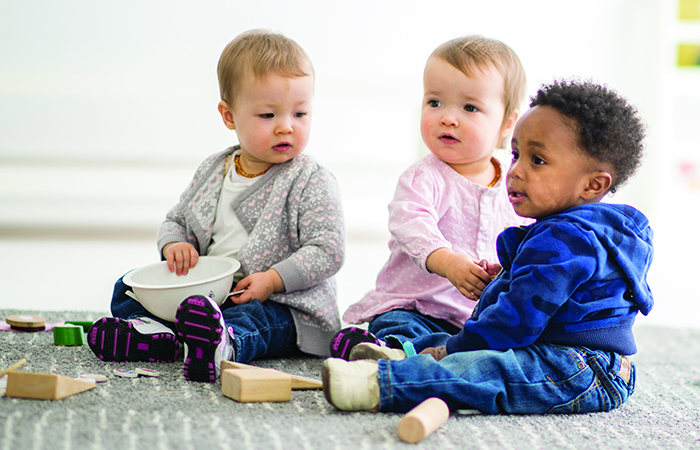
childrens are playing
childrens playing

Feeding for Healthy Growth

mom and child

Trying to make your child eat more or less to make them gain weight faster or slower can backfire. If Kimmy’s mom tries to make her eat less, Kimmy may whine for food, eat quickly, get food on her own and eat more than she needs. If Mika’s mom tries to make him eat more and they battle over it, Mika can’t tell if he’s hungry or full and chances are he won’t eat or grow any better, either!

Thinking about what your child eats is important, but research shows that how you feed also matters. A way of feeding that helps children grow well is called the “Division of Responsibility,” where parents and children have divided jobs. You decide what, when and where your child eats, and they decide how much to eat or whether to eat at all during meals and snacks. Remember — sitting down at the table is the healthiest and safest place for your child to eat. They learn by watching and you can make sure they don’t choke.

What Else Affects Growth?

If your family tends to be short and stocky, or tall and lean, your child will likely be too. But that’s only part of the puzzle. Research tells us that not enough sleep, skipping meals, too much TV or screen time, and stress can interfere with healthy growth.

Tips to Support Healthy Growth:

  • ✓ Offer meals and snacks at around the same times most days — this will keep your child from “grazing.”
  • ✓ Offer water from a favorite cup between meals and snacks.
  • ✓ Start with small portions and allow more. Some meals will be bigger, some smaller. They may leave food. It’s hard to waste food, but it’s better than making your child eat, and you’ll waste less in the long run.
  • ✓ Look for fun ways for your toddler to play and be active.
  • ✓ Help your child get enough sleep. Toddlers need about 12-14 hours in 24 hours. A bedtime routine helps your child get to bed around the same time most nights: try a bath, a song or two, tuck them in and read a book.
  • ✓ If you allow screens like TV, save it for earlier in the day and try not to have screens where children sleep.
children Healthy Growth

With small children and the demands of work and daily life, there can be a lot of stress. Having a routine can go a long way to ease stress for you and your child. Not fighting over how much your child eats will make meals a time to connect and enjoy each other. Although Kimmy and Mika are different sizes, they can be fed the same way and grow up healthy and happy.

You May Also Like...

March 4, 2026

Shopping With Kids: A Simple Way to Help Them Like More Foods

A Simple Way to Help Kids Like More Foods Getting kids to try new foods can feel hard. One helpful place to start is the grocery store. When kids get…

Read More
2
October 15, 2025

Pumpkin Fun: Free and Healthy Activities for Kids Under 5

Play, Learn, and Grow with Pumpkins Pumpkins aren’t just for carving! They’re healthy, fun, and great for learning, too. Pumpkins are full of good stuff like vitamins A and C.…

Read More
1
August 27, 2025

Letting Your Child Play with Food Can Be a Good Thing

Letting Your Child Play with Food Can Be a Good Thing You may have heard (or even said yourself), “Don’t play with your food!” But what if playing with food…

Read More
3
  • Infant
    • When to Start Peanut and Egg to Help Prevent Allergies
    • The Basics of Paced Bottle-Feeding
    • How Do I Know If My Baby Could Be Tongue-Tied?
    • Protect Your Baby from Cronobacter
    • Exploring the World with Baby – Sensory Play
  • Children
    • Shopping With Kids: A Simple Way to Help Them Like More Foods
    • Pumpkin Fun: Free and Healthy Activities for Kids Under 5
    • Letting Your Child Play with Food Can Be a Good Thing
    • Is Snack Time Treat Time?
    • Fun Ways to Learn About Healthy Food and Get Moving!
  • General /Family
    • The 2025-2030 Dietary Guidelines for Americans – What Families Need to Know
    • Finding Calm When Life Gets Busy: Stress-Management for Parents
    • February Is National Heart Month: Simple Ways to Show Your Heart Some Love
    • 10 Ways to Enjoy Avocados – And Helpful Tips to Feed with Confidence
    • Food, Feelings, and Finding Balance: Understanding Disordered Eating
  • Women
    • Newborn Hunger Cues: How to Know When Your Baby Is Hungry or Full
    • How to Know Your Baby Is Getting Enough Breastmilk
    • Breastfeeding Through Growth Spurts and Sleep Changes
    • Baby Blues… or Is It Something More?
    • Gut Health and Gestational Diabetes
  • Recipes
    • Heart-Healthy Recipe: Banana Berry Oatmeal Cups
    • Is the Chia Seed Challenge Worth It?
    • Extra Vegetables Quiche
    • Easy Pumpkin Muffins
    • Confetti Bean Salad
LiveWell WIC program logo

Contact Us

USDA is an equal opportunity provider, employer, and lender.

Cookie PolicyAbout UsPrivacy PolicyTerms of Agreement

© Brush Art Corporation

  • Email
  • SMS
If you are using multiple emails, separate them with commas.

    SMS Communication Consent

    Share

    Share this link via:

    Side Lying Hold

    Side-Lying Hold

    1. For the right breast, lie on your right side with your baby facing you.
    2. Pull your baby close. Your baby’s mouth should be level with your nipple.
    3. In this position, you can cradle your baby’s back with your left arm and support yourself with your right arm and/or pillows.
    4. Keep loose clothing and bedding away from your baby.
    5. Reverse for the left breast.

    This hold is useful when:

    • You had a C-section
    • You want to rest while baby feeds
    • You are breastfeeding in the middle of the night
    • You and your baby are comfortable in this position
    Wooden carved fork resting on the edge

    Cross-Cradle Hold

    1. For the right breast, use your left arm to hold your baby’s head at your right breast and baby’s body toward your left side. A pillow across your lap can help support your left arm.
    2. Gently place your left hand behind your baby’s ears and neck, with your thumb and index finger behind each ear and your palm between baby’s shoulder blades. Turn your baby’s body toward yours so your tummies are touching.
    3. Hold your breast as if you are squeezing a sandwich. To protect your back, avoid leaning down to your baby. Instead, bring your baby to you.
    4. As your baby’s mouth opens, push gently with your left palm on baby’s head to help them latch on. Make sure you keep your fingers out of the way.
    5. Reverse for the left breast.

    This hold is useful when:

    • Your baby is premature
    • Your baby has a weak suck
    • Your baby needs help to stay latched
    • Your baby needs extra head support
    • You and your baby are comfortable in this position
    Woman with shopping bag

    Clutch or “Football” Hold

    1. For the right breast, hold your baby level, facing up, at your right side.
    2. Put your baby’s head near your right nipple and support their back and legs under your right arm.
    3. Hold the base of your baby’s head with your right palm. A pillow underneath your right arm can help support your baby’s weight.
    4. To protect your back, avoid leaning down to your baby. Bring baby to you instead.
    5. Reverse for the left breast.

    This hold is useful when:

    • You had a C-section
    • You have large breasts
    • You have flat or inverted nipples
    • You have a strong milk let-down
    • You are breastfeeding twins
    • Your baby likes to feed in an upright position
    • Your baby has reflux
    • You and your baby are comfortable in this position
    Cartoon-style abstract bird silhouette

    Cradle Hold

    1. For the right breast, cradle your baby with your right arm. Your baby will be on their left side across your lap, facing you at nipple level.
    2. Your baby’s head will rest on your right forearm with your baby’s back along your inner arm and palm.
    3. Turn your baby’s tummy toward your tummy. Your left hand is free to support your breast, if needed. Pillows can help support your arm and elbow.
    4. To protect your back, avoid leaning down to your baby. Instead, bring your baby to you.
    5. Reverse for the left breast.

    This hold is useful when:

    • Your baby needs help latching on
    • You and your baby are comfortable in this position
    Abstract geometric shapes in pastel

    Laid-Back Hold

    1. Lean back on a pillow with your baby’s tummy touching yours and their head at breast level. Some moms find that sitting up nearly straight works well. Others prefer to lean back and lie almost flat.
    2. You can place your baby’s cheek near your breast, or you may want to use one hand to hold your breast near your baby. It’s up to you and what you think feels best.
    3. Your baby will naturally find your nipple, latch, and begin to suckle.

    This hold is useful when:

    • Your baby is placed on your chest right after birth
    • You have a strong milk let-down
    • You have large breasts
    • You and your baby are comfortable in this position