Skip to Content Skip to Footer
LiveWell WIC logo
Livewell Wic
  • Home
  • Ellyn Satter
    • Ellyn Satter
      Prenatal / Postpartum
    • Ellyn Satter
      Newborn / Infant
    • Ellyn Satter
      Older Baby / Almost Toddler
    • Ellyn Satter
      Toddler / Preschooler
  • Breastfeeding
  • Eat·Grow·Live Healthy
    • Eat·Grow·Live Healthy
      Women
    • Eat·Grow·Live Healthy
      Infants
    • Eat·Grow·Live Healthy
      Children
    • Eat·Grow·Live Healthy
      Fathers
  • Live Well Blog
  • Español
The Picky Eater Playbook: Feeding without the Fuss WIC

The Picky Eater Playbook: Feeding without the Fuss

  • Home
  • Live Well Blog
  • The Picky Eater Playbook: Feeding without the Fuss
March 19, 2025 Children

feeding-young-childern
Sometimes feeding young children can feel like a battle. What if you could be confident that your child will get the nutrition they need without the stress?

Here’s some good news:

You Can!

The key is understanding the division of responsibility in feeding.

As a parent, your role is to provide nourishing meals and snacks at regular times. Your child’s role is to decide whether and how much to eat. This approach helps create a positive mealtime experience and encourages healthy eating habits over time.

picky-eating-icon

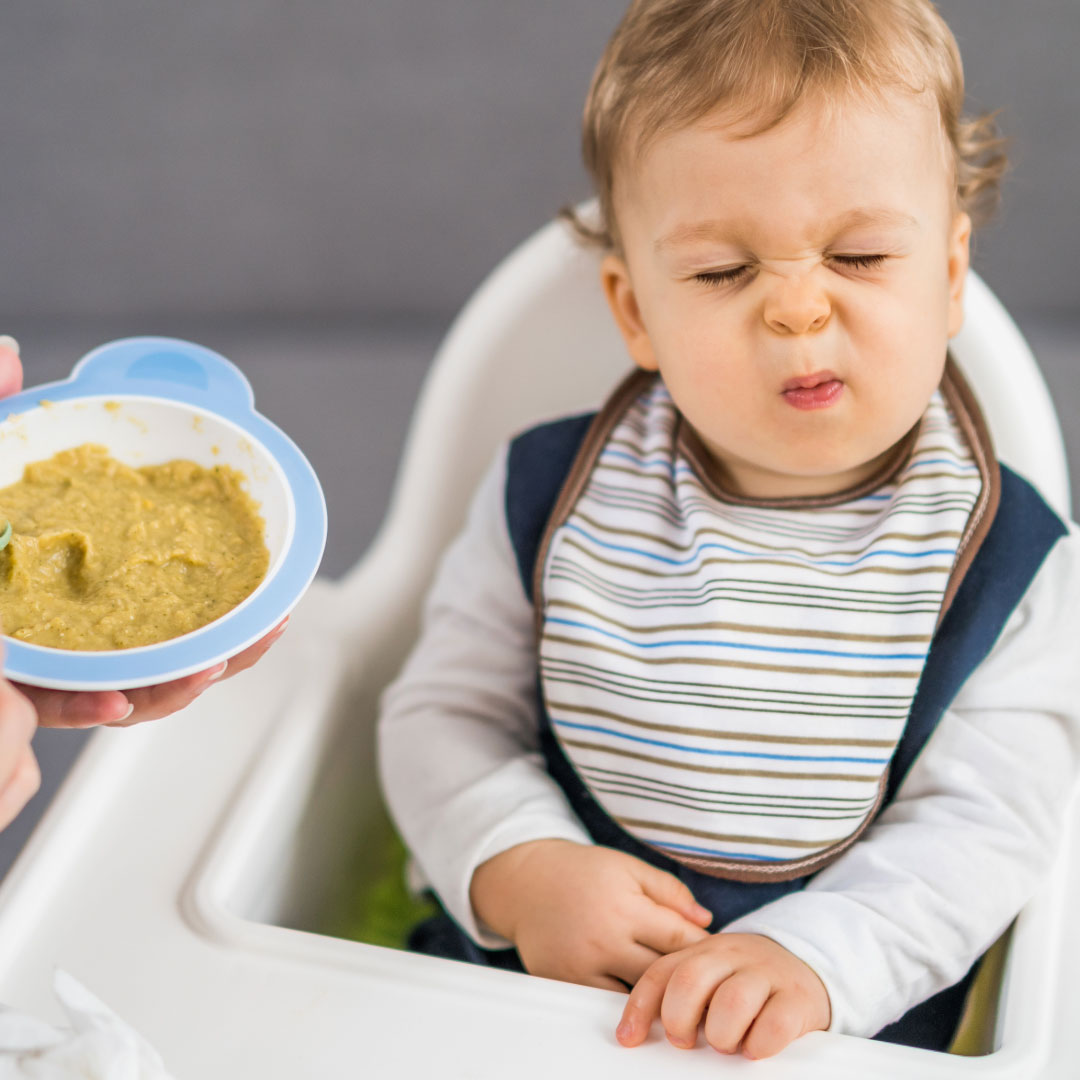
Most children go through a picky eating phase, often starting around age 1 or 2 years of age. This is when they begin to express opinions about food. One day they love carrots; the next day, they won’t touch them. This is completely normal!

Try these tips to support your picky eater and help them build healthy eating habits for life:

Respect Their Appetite

Don’t force your child to eat or insist they clean their plate. Pressuring them can lead to power struggles and negative feelings about food. Instead, encourage them to listen to their bodies. Let them ask for more if they’re still hungry or stop if they’re full. Keep mealtimes structured by having everyone sit at the table together, even if your child isn’t eating.

Respect-Their-Appetite
Get Them Involved

Kids are more likely to try new foods when they’re part of the process. Invite them to help with meal prep, set the table, or clean up. At the grocery store, let them pick out colorful fruits or vegetables. These small tasks help them feel included and excited about mealtimes. For older kids, teaching cooking skills can have lasting benefits. Research shows that teens who learn to cook eat more fruits and vegetables
as adults.

Get-Them-Involved
Explore and Play

Encourage your child to explore their food. Talk about the color, shape, smell, taste, and texture of different foods. Fun activities like taste tests can make trying new foods less intimidating. For example, have them compare the sweetness of apples or the crunchiness of different crackers. When food feels fun, kids are more open to it.

Explore-and-Play
Teach the “Why” of Healthy Eating

Kids are curious by nature. Use this to your advantage by explaining why certain foods are good for their growing bodies. Research shows that when children understand the benefits of healthy foods, like fruits, vegetables, and beans, they’re more willing to eat them. Share simple, age-appropriate messages like, “Carrots help you see better.” or “Yogurt helps you grow strong.”

Teach-the-Why-of Healthy-Eating
Offer a Variety

Serve meals and snacks at regular times throughout the day with a mix of nourishing and tasty options. Even if your child doesn’t eat much at one meal, they’ll have plenty of chances to get the nutrition they need. Repeated exposure to new foods helps children become more comfortable with them. The key is to remain patient – your child may need to see a new food 15 or more times before they are willing to try it.

Offer a Variety
Create a Calm Mealtime Environment

Kids are more likely to try new foods when mealtimes are calm and pleasant. Turn off the TV and put away electronic devices so your child can focus on eating and enjoying family time. A relaxed atmosphere makes food exploration feel safe and positive.

Create a Calm Mealtime Environment
Make Food Fun

Brighten up meals with creative touches! Cut sandwiches into fun shapes, create silly food faces, or serve colorful fruits and veggies. Older kids might enjoy unexpected meals, like breakfast for dinner, or experimenting with dips and sauces. Smoothies made with vibrant fruits and vegetables are another
great option.

Make Food Fun
Skip Dessert Bribes

Using dessert as a reward can send the message that sweets are the best part of the meal. Instead, offer desserts occasionally as part of a balanced approach to eating. You can even make dessert healthier by incorporating fruits, yogurt, or whole grains.

Skip Dessert Bribes
Building Lifelong Healthy Habits

Your child’s eating habits likely won’t change overnight, but with patience and consistency, they can develop a positive relationship with food. Remember, your role is to provide a variety of nutritious options. Trust your child to decide how much to eat. Over time, this division of responsibility will empower them to make healthy choices for life.

You’ve got this!
Building Lifelong Healthy Habits

REFERENCES

LeBlanc J, Ward S, LeBlanc CP. The Association Between Adolescents’ Food Literacy, Vegetable and Fruit Consumption, and Other Eating Behaviors. Health Educ Behav. 2022 Aug;49(4):603-612. doi: 10.1177/10901981221086943. Epub 2022 Apr 2. PMID: 35373626; PMCID: PMC9350450.
https://pmc.ncbi.nlm.nih.gov/articles/PMC9350450/
Mayo Clinic Health System. Raising healthy eaters: Should kids clean their plate?
https://www.mayoclinichealthsystem.org/hometown-health/speaking-of-health/raising-healthy-eaters-should-kids-clean-their-plate

You May Also Like...

March 4, 2026

Shopping With Kids: A Simple Way to Help Them Like More Foods

A Simple Way to Help Kids Like More Foods Getting kids to try new foods can feel hard. One helpful place to start is the grocery store. When kids get…

Read More
2
October 15, 2025

Pumpkin Fun: Free and Healthy Activities for Kids Under 5

Play, Learn, and Grow with Pumpkins Pumpkins aren’t just for carving! They’re healthy, fun, and great for learning, too. Pumpkins are full of good stuff like vitamins A and C.…

Read More
1
August 27, 2025

Letting Your Child Play with Food Can Be a Good Thing

Letting Your Child Play with Food Can Be a Good Thing You may have heard (or even said yourself), “Don’t play with your food!” But what if playing with food…

Read More
3
  • Infant
    • When to Start Peanut and Egg to Help Prevent Allergies
    • The Basics of Paced Bottle-Feeding
    • How Do I Know If My Baby Could Be Tongue-Tied?
    • Protect Your Baby from Cronobacter
    • Exploring the World with Baby – Sensory Play
  • Children
    • Shopping With Kids: A Simple Way to Help Them Like More Foods
    • Pumpkin Fun: Free and Healthy Activities for Kids Under 5
    • Letting Your Child Play with Food Can Be a Good Thing
    • Is Snack Time Treat Time?
    • Fun Ways to Learn About Healthy Food and Get Moving!
  • General /Family
    • The 2025-2030 Dietary Guidelines for Americans – What Families Need to Know
    • Finding Calm When Life Gets Busy: Stress-Management for Parents
    • February Is National Heart Month: Simple Ways to Show Your Heart Some Love
    • 10 Ways to Enjoy Avocados – And Helpful Tips to Feed with Confidence
    • Food, Feelings, and Finding Balance: Understanding Disordered Eating
  • Women
    • Newborn Hunger Cues: How to Know When Your Baby Is Hungry or Full
    • How to Know Your Baby Is Getting Enough Breastmilk
    • Breastfeeding Through Growth Spurts and Sleep Changes
    • Baby Blues… or Is It Something More?
    • Gut Health and Gestational Diabetes
  • Recipes
    • Heart-Healthy Recipe: Banana Berry Oatmeal Cups
    • Is the Chia Seed Challenge Worth It?
    • Extra Vegetables Quiche
    • Easy Pumpkin Muffins
    • Confetti Bean Salad
LiveWell WIC program logo

Contact Us

USDA is an equal opportunity provider, employer, and lender.

Cookie PolicyAbout UsPrivacy PolicyTerms of Agreement

© Brush Art Corporation

  • Email
  • SMS
If you are using multiple emails, separate them with commas.

    SMS Communication Consent

    Share

    Share this link via:

    Side Lying Hold

    Side-Lying Hold

    1. For the right breast, lie on your right side with your baby facing you.
    2. Pull your baby close. Your baby’s mouth should be level with your nipple.
    3. In this position, you can cradle your baby’s back with your left arm and support yourself with your right arm and/or pillows.
    4. Keep loose clothing and bedding away from your baby.
    5. Reverse for the left breast.

    This hold is useful when:

    • You had a C-section
    • You want to rest while baby feeds
    • You are breastfeeding in the middle of the night
    • You and your baby are comfortable in this position
    Wooden carved fork resting on the edge

    Cross-Cradle Hold

    1. For the right breast, use your left arm to hold your baby’s head at your right breast and baby’s body toward your left side. A pillow across your lap can help support your left arm.
    2. Gently place your left hand behind your baby’s ears and neck, with your thumb and index finger behind each ear and your palm between baby’s shoulder blades. Turn your baby’s body toward yours so your tummies are touching.
    3. Hold your breast as if you are squeezing a sandwich. To protect your back, avoid leaning down to your baby. Instead, bring your baby to you.
    4. As your baby’s mouth opens, push gently with your left palm on baby’s head to help them latch on. Make sure you keep your fingers out of the way.
    5. Reverse for the left breast.

    This hold is useful when:

    • Your baby is premature
    • Your baby has a weak suck
    • Your baby needs help to stay latched
    • Your baby needs extra head support
    • You and your baby are comfortable in this position
    Woman with shopping bag

    Clutch or “Football” Hold

    1. For the right breast, hold your baby level, facing up, at your right side.
    2. Put your baby’s head near your right nipple and support their back and legs under your right arm.
    3. Hold the base of your baby’s head with your right palm. A pillow underneath your right arm can help support your baby’s weight.
    4. To protect your back, avoid leaning down to your baby. Bring baby to you instead.
    5. Reverse for the left breast.

    This hold is useful when:

    • You had a C-section
    • You have large breasts
    • You have flat or inverted nipples
    • You have a strong milk let-down
    • You are breastfeeding twins
    • Your baby likes to feed in an upright position
    • Your baby has reflux
    • You and your baby are comfortable in this position
    Cartoon-style abstract bird silhouette

    Cradle Hold

    1. For the right breast, cradle your baby with your right arm. Your baby will be on their left side across your lap, facing you at nipple level.
    2. Your baby’s head will rest on your right forearm with your baby’s back along your inner arm and palm.
    3. Turn your baby’s tummy toward your tummy. Your left hand is free to support your breast, if needed. Pillows can help support your arm and elbow.
    4. To protect your back, avoid leaning down to your baby. Instead, bring your baby to you.
    5. Reverse for the left breast.

    This hold is useful when:

    • Your baby needs help latching on
    • You and your baby are comfortable in this position
    Abstract geometric shapes in pastel

    Laid-Back Hold

    1. Lean back on a pillow with your baby’s tummy touching yours and their head at breast level. Some moms find that sitting up nearly straight works well. Others prefer to lean back and lie almost flat.
    2. You can place your baby’s cheek near your breast, or you may want to use one hand to hold your breast near your baby. It’s up to you and what you think feels best.
    3. Your baby will naturally find your nipple, latch, and begin to suckle.

    This hold is useful when:

    • Your baby is placed on your chest right after birth
    • You have a strong milk let-down
    • You have large breasts
    • You and your baby are comfortable in this position